
POLICY PIONEERS- Health Track
HEALTH POLICY SPECIALIZATION
India’s health challenge is less about medicine than about the systems that deliver it.
A four-month, practitioner-led specialization on why care in India reaches some people and not others, and what it takes to change that: financing, regulation, institutions and the long distance between a scheme and a patient. Built for people who want to fix these systems, not only diagnose them.

Applications Now Open
The field
WHAT IS HEALTH POLICY?
Health policy is about how a country decides who gets care, who pays for it, and what happens when the answer is nobody.
This calls for two things, learned together:
The method. Training in how health policy actually gets made: the politics behind decisions, and the analytical tools to read and evaluate them.
The substance. Real knowledge of the issues at stake: how India’s health system is governed, financed, and regulated, from the state down to frontline workers, and where public and private care collide.
Health policy asks a wider question: what should a government fund, regulate and build so that care actually reaches people. And most of the difficulty sits after the decision is made, in the distance between a scheme announced in Delhi and a person seen at a primary health centre.
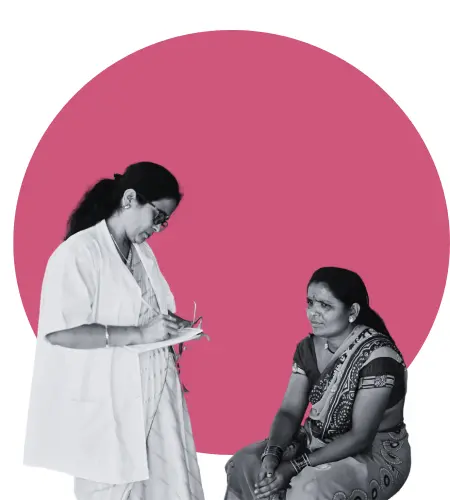
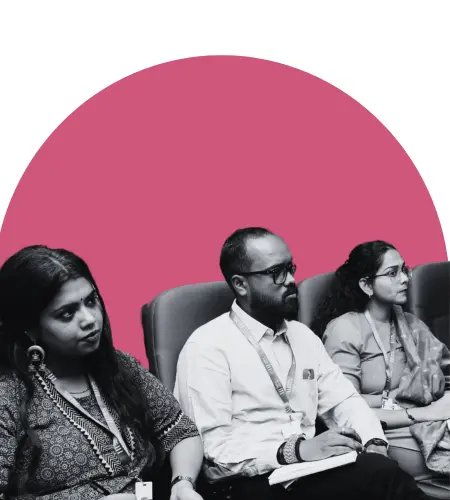
The specialization
BUILT TO CLOSE THE GAP
Out-of-pocket costs.Doctor shortages where they are needed most.
Insurance that does not cover what people actually fall ill with. A public system carrying more than it was built for.
India’s health ambitions are growing faster than the systems meant to deliver them. This specialisation is built to close that gap.
Over four months, you learn why India’s health system struggles and what it takes to fix it: how care is financed, how institutions are governed, what technology changes and what it does not.
You are taught by practitioners, and you apply what you learn through a hands-on project with a serving officer, on a live health policy problem rather than a hypothetical one.
WHERE THIS SITS IN THE POLICY PIONEERS PROGRAM?
The Health specialization is one track within Policy Pioneers. Alongside the domain modules, every participant covers the common programme:
Self-assessment
IS THIS THE RIGHT TRACK FOR YOU?
Health policy is not only for doctors. It is for anyone curious about why care reaches some people and not others, and what it would take to change that.
This is for you if
- ✓You have watched someone struggle to get care they needed, and wanted to understand why the system failed rather than only who to blame
- ✓You are interested in how care gets paid for: insurance, out-of-pocket spending, public provision, and who ends up carrying the cost
- ✓You are more curious about why health programmes stall at delivery than about clinical practice itself
Probably not for you if
- ✕ You want clinical or medical training. This is a policy program. It will not make you a better clinician, though it may make you a more effective one outside the consulting room
- ✕You want a hospital management qualification. Health policy asks how the system should be designed, not how to run a single institution
- ✕You want a certificate without the work. The program is project-based and demanding
QUESTIONS YOU WILL WORK ON
Curriculum
SIX MODULES, FROM PROBLEM TO DELIVERY
The Health specialization focuses on why India’s health system struggles and what it takes to fix it. The six modules move from understanding the system to designing and delivering change within it.
HEALTH in the Indian context
What health means beyond the absence of disease, and how India’s economic, demographic and disease shifts change what the system has to do.
Indic perspectives HealthTriple TransitionDeterminants of Health
HEALTH SYSTEMS AND GOVERNANCE
How India’s health system is built and who is responsible for what, from the state down to the frontline worker.
Governance ArchitectureHealth RegulationrFrontline Workers

HEALTH FINANCING AND ACCESS
How care gets paid for, and where public and private roles meet, overlap or fall short.
Health financingPublic-Private ModelsHealth Insurance

GLOBAL HEALTH AND HEALTH SECURITY
How pandemics, treaties and trade rules shape what a country can and cannot protect its people from.
Health diplomacyComparative SystemsPandemic Preparedness

TECHNOLOGY AND THE FUTURE OF CARE
How digital systems, data and AI are changing the way care is delivered and who it actually reaches.
Health DataDigital Health AI in Health
POLICY DESIGN AND IMPLEMENTATION
What makes health policy succeed in practice: design, behaviour change, and measuring results.
Design ThinkingSystems ThinkingBehavioural Efficiency
Hands-on projects
HEALTH IN PRACTICE
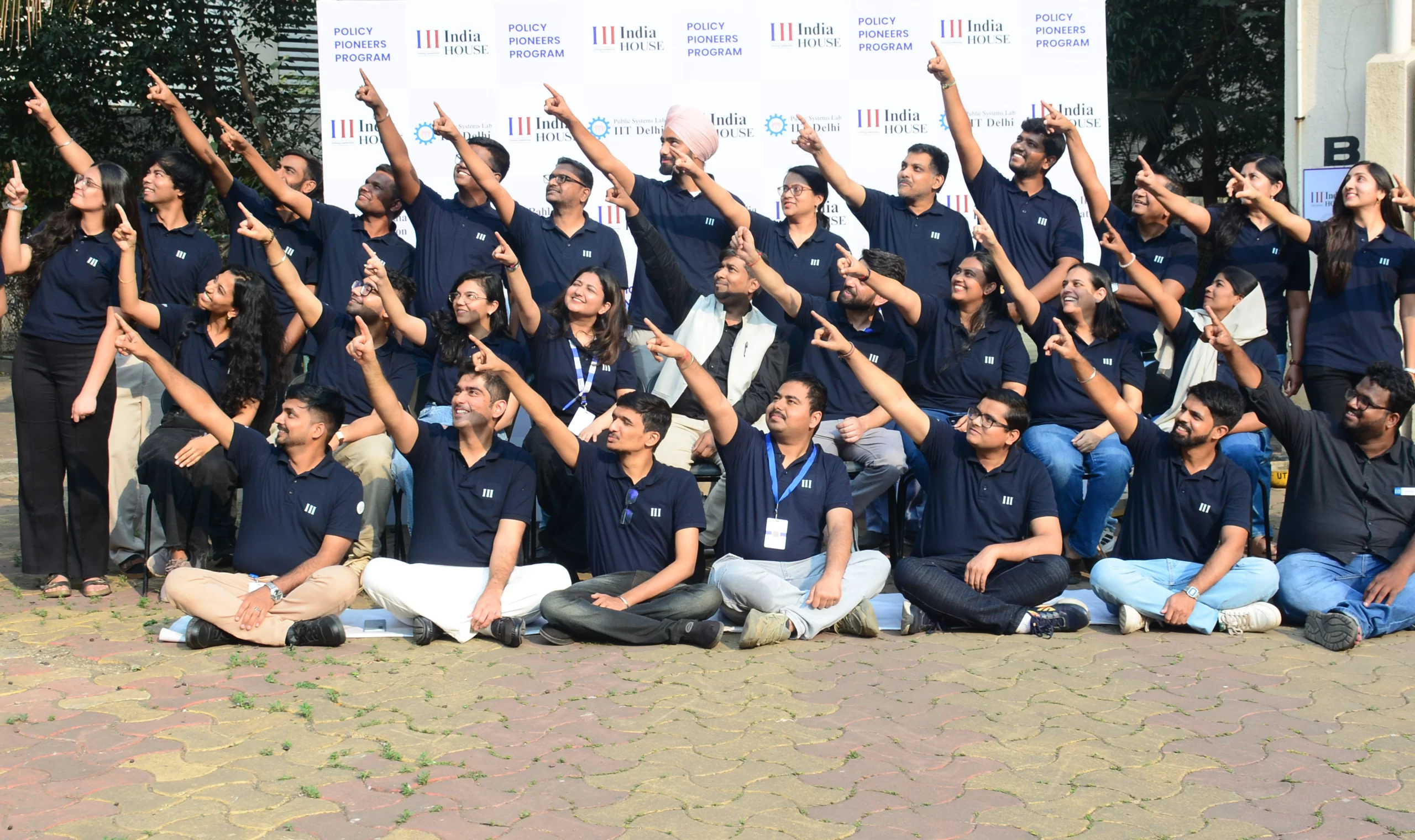
Past Policy Pioneers’ Cohort worked alongside bureaucrats and practitioners on live policy problems.

Redesigning Health Missions
Programs aimed for rapid public health outcomes, but siloed departments and weak accountability often keep results on paper. This project studied 3-4 flagship health missions to map stakeholder architecture and feedback loops, building a repeatable playbook for stronger program delivery.
Additional Secretary to the President of India
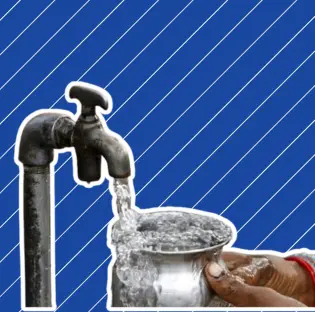
Making Rural Tap running
Over 81% of rural Indian households now have tap-water access under the Jal Jeevan Mission but irregular supply, low pressure, and unclear accountability remain. This project designed a 24×7 Water Assurance Model across village types, integrating technical, financial, and governance solutions.
General and CEO, National Human Rights Commission
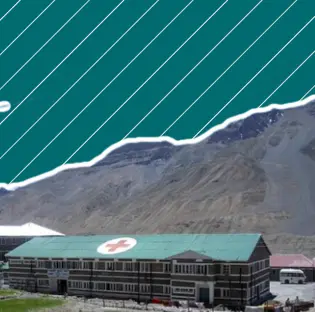
Closing the hill health gap
Hilly terrain and sparse populations make healthcare access a uniquely hard problem weak referral systems, difficult transport, and poor coordination between health centres often break the chain of care. Using North Garo Hills as an anchor case, this project mapped a patient’s journey & built a framework.
OSD to the Uttarakhand Government
Faculty
TAUGHT BY PEOPLE WHO DO THE WORK
Sessions are led by people who work in health policy rather than only teach it: civil servants, regulators, researchers, health financing specialists, and practitioners from the development sector and industry.

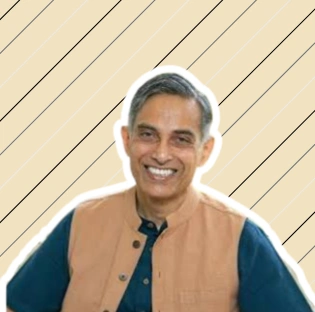
Dr. Santosh Moses
Partner, Health Transformation, Grant Thornton Bharat LLP
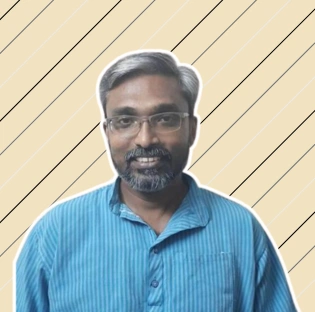
Dr. Rajiv Vasudevan
Founder & CEO, Apollo AyurVAID
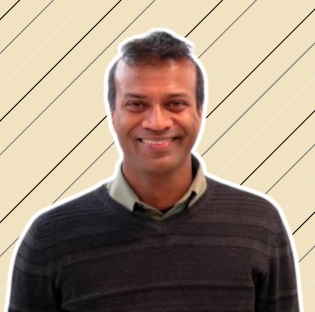
Mathew George
Department of Public Health and Community Medicine, Central University of Kerala
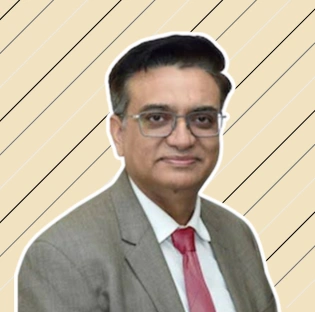
Anurag Mairal
Adjunct Professor, Stanford School of Medicine
Dr. Dinesh Arora
Principal Health Specialist, Asian Development Bank
Careers
WHERE THIS LEADS
The specialization builds capability rather than placing candidates. You leave with a working understanding of how health policy is made in India, practical experience of applying it, and a network of people doing the work.
Think tanks and research
Policy and research roles in research institutions, building the evidence base for health policy
Government and public bodies
Program and regulatory roles in health ministries, national missions and state departments
HOSPITAL AND HEALTH SYSTEMS
Health administration and quality roles in hospitals, insurers and provider networks
GLOBAL HEALTH AND DEVELOPMENT
Program and technical roles in multilateral agencies, global funds and bilateral partnerships
HEALTH TECH AND LIFE SCIENCES
Digital health, market access and regulatory roles in health startups, pharma and diagnostics
PHILANTHROPY AND NONPROFITS
Grantmaking and implementation roles in foundations and community health organizations
Program details
DATES, FORMAT AND FEE
Key details
| Dates | Winter Cohort: December 2026 to April 2027 Applications close: 6 September 2026 |
| Format | Blended. Live online sessions plus 2 in-person camps. |
| Time commitment | 12-15 hours per week |
| Eligibility | Open to graduates, postgraduates, and working professionals from any discipline. |
| Selection | Sign up → Application → Shortlisting → Personal interview → Selection |
Fee and scholarships
| Fee | Rs. 59000 + 18% GST |
| Scholarships | Need- and merit-based scholarships available, up to 75% |
| Payment | Flexible payment plans, including instalments, are available. |
APPLY TO THE WINTER COHORT
The Health Policy Specialization runs from December 2026 to April 2027.
Applications close on 06th September 2026.