
THE BEST OF INDIA, FOR INDIA.
Real-World Projects | Purposeful Innovation | Nation-Building Leadership
Hands-On Projects (HOPs) are real-world, learner-led challenges embedded in our Policy Pioneers Program. Each HOP places participants in the pilot’s seat of policymaking — exposing them to the practitioner’s lens while they work on real-world challenges.
At each term:
- Concepts from the curriculum are tested in real-world settings.
- Hands-on projects reflect and reinforce curriculum learning.
- Feedback loops strengthen understanding and delivery.
- Systemic thinking is practised, not just studied.
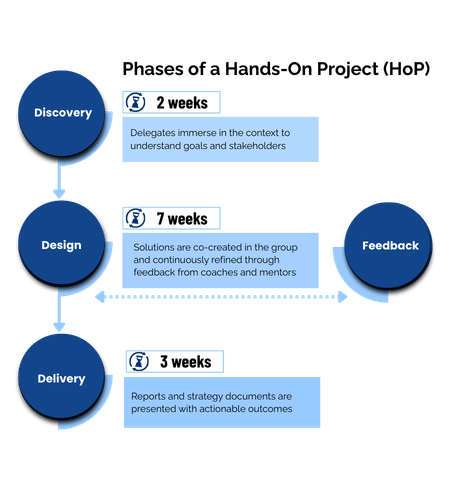
Where Policy Meets Practice: Hands On-Projects 2025

Comprehensive Support System for Women SHG Members and Entrepreneurs: Enabling Sustained Livelihoods
Context: India has over 6 crore women SHG members, yet female labor participation remains low at 37%. Many women, including former professionals and rural workers, face systemic hurdles when entering or re-entering the economy. Gaps in capital, mentorship, and digital literacy persist for those returning from caregiving or facing limited institutional support.
Challenge: Empowerment lacks a one size fits all approach due to the heterogeneity of women’s experiences and education. Existing programs are fragmented and fail to provide the personalized, sustained support needed at different life stages. There is a clear gap in recognizing diverse social expectations and regional constraints across entrepreneurial levels.
Description: This project creates a segmented support framework based on life stage and readiness. It integrates models like Mahila e-Haat into a unified platform addressing reskilling, incubation, and financial access. The model emphasizes flexible, community based delivery and digital enablement to provide affordable pathways for women’s economic participation.

Transforming School Education in Gujarat: District-Level Implementation of NEP & NCF
Context: NEP 2020 and NCF 2023 mandate a shift from rote learning to competency based education. Gujarat, with 1.1 crore students, is a vital testing ground for formative assessments and innovative pedagogy. However, embedding locally contextualized curricula within the state’s vast school system requires structured administrative leadership and pedagogical reform.
Challenge: District level implementation struggles with limited resources and weak ownership. District Collectors lack structured frameworks and incentives to drive these educational reforms. Ensuring accountability and sustainable adoption of NEP-NCF priorities remains difficult without a clear roadmap that aligns administrative authority with academic goals.
Description: This project designs a district focused framework for NEP-NCF implementation in Gujarat. it analyzes models like the Happiness Curriculum and global experiential learning to recommend actionable steps. The project focuses on incentivizing leadership, integrating formative assessments, and creating guidelines to embed local culture into the learning process.

District Handbook: Enabling Strategic DM-CSO Collaboration in Education
Context: As of May 2025, over 3.7 lakh civil society organisations are registered on NGO Darpan, with nearly 29,000 focused on education. Despite this presence, district administrations lack structured frameworks to tap into these actors effectively to improve educational outcomes and school quality.
Challenges: Partnerships remain sporadic, personality driven, and poorly institutionalised. District leaders face limited guidance on engagement protocols, due diligence, and outcome alignment. This reduces the strategic value of collaborations and leads to fragmented efforts rather than systemic impact.
Description: This project develops an administrator facing handbook to guide District Magistrates in systematically onboarding and managing CSO partnerships. It covers engagement models, MoU frameworks, and monitoring tools. The handbook provides protocols to ensure legal compliance and outcome alignment.

Integrating Entrepreneurship into Government School Curriculum
Context: Entrepreneurship education is largely absent in India’s public schools, with fewer than 5% of government schools offering structured exposure. While NEP 2020 promotes experiential learning, scalable interventions to build entrepreneurial mindsets in underserved areas are still evolving and lack systemic integration.
Challenge: Government schools face constraints like untrained educators, rigid curricula, and weak ecosystem linkages. There is no comprehensive, scalable model to integrate entrepreneurial thinking across diverse geographies. Bridging this gap requires balancing institutional limitations with the need for flexible, practical learning.
Description: This project creates a framework for embedding entrepreneurship education into government schools. It analyzes models like Business Blasters and Atal Tinkering Labs to identify successful elements. The team will co-design an adaptable curriculum, funding models, and faculty mechanisms while recommending partnerships with incubators and local businesses.

S&T Diplomacy Blueprint: Leveraging International Alliances for Frontier Technologies
Context: India has made strides through iCET, QUAD, and missions with the EU and Japan. However, it lacks an institutionalized playbook for diplomats to systematically engage foreign tech ecosystems. This gap hinders the ability to nurture partnerships for businesses, safeguard critical interests, and proactively shape global technology governance.
Challenge: Diplomatic missions engage on tech issues without a standard framework to prioritize technologies of national interest or map foreign R&D ecosystems. This leads to fragmented gains and missed opportunities in translating partnerships into tangible developmental and security outcomes compared to global peers.
Description: This project creates a Science and Technology Diplomacy Playbook for the MEA. It equips policymakers with tools to map global ecosystems and frameworks to design partnerships in critical technologies. The playbook provides guidelines to safeguard against dependency and models to strengthen India’s role in tech governance.
Behavioral Playbook for Agriculture and Women & Child Development (WCD) Interventions
Context: Agriculture employs 45% of India’s workforce but contributes only 18% to GDP, with smallholders struggling to adopt modern practices. On nutrition, NFHS-5 shows 53% of women are anemic despite POSHAN Abhiyaan. Outcomes falter due to behavioral barriers like resistance to change, entrenched habits, and information gaps.
Challenge: Administrative implementation often defaults to uniform approaches that miss local contexts. District leaders, despite being well-placed to drive change, lack structured behavioral tools to design and test context-specific interventions that address human psychology and local socio-cultural realities.
Description: This project creates a Behavioral Playbook for District Leaders to strengthen agriculture and nutrition programs. It provides actionable tools like nudges and incentive design. Learners will map bottlenecks in cropping and maternal nutrition to co-design prototypes that can be piloted and adapted at the district level.
Integrating Climate Resilience into Urban Planning: A Framework for Environmentally Sustainable Cities
Context: Indian cities generate 75% of GDP but face severe air pollution, flooding, and heatwaves. While MoHUA programs like AMRUT 2.0 emphasize climate resilience, most local bodies lack integrated frameworks. This leads to fragmented interventions in waste, water, and green cover rather than cohesive planning.
Challenge: Planning processes prioritize infrastructure over sustainability. Local bodies lack standardized tools for climate risk assessment, green budgeting, and ecological zoning. Citizen participation is often limited to awareness campaigns, lacking structured mechanisms for co-managing lakes or forests.
Description: This project develops a framework to integrate climate resilience into urban planning. It analyzes master plans to identify blind spots and proposes tools like risk mapping and green budgeting. It also highlights citizen led stewardship models that can be institutionalized within city governance.
Plastic Waste Management in Eco Sensitive Zones
Context: India generates 3.5 million tonnes of plastic waste annually, but only 30% is recycled. Hill states like Almora face unique crises, producing 35 tonnes daily that often goes unmanaged due to jurisdictional gaps. Plastic dumps along rivers threaten ecosystems despite successful civil society efforts like Healing Himalayas.
Challenge: Tourist areas and peri-urban zones often fall outside municipal boundaries, creating a governance vacuum. Plastic piles up without accountability, and changing citizen behavior regarding single use plastics remains difficult. This results in unmanaged waste in no man’s land zones with no clear authority.
Description: This project designs a Plastic Waste Management Framework for governance vacuums. It combines a carrot and stick approach with civil society participation. The study analyzes jurisdictional gaps and proposes actionable behavioral and institutional mechanisms to fix waste accountability and promote recycling.
Designing a Process-Oriented Framework for Teacher Transfers in Government Schools
Context: India has over 97 lakh teachers, yet transfer processes—essential for balancing regional learning outcomes—face opacity and politicization. While states like Karnataka and Odisha show promise with digital systems, many regions still rely on inconsistent methods that bypass merit or need-based criteria, leading to a misallocation of human resources.
Challenge: Teacher transfers are often arbitrary, lacking transparency and stakeholder trust. Many movements are influenced by personal networks rather than student-centric requirements. This results in urban over-concentration while remote districts face vacancy rates exceeding 30%, directly undermining education equity in underserved areas.
Description: This project aims to design a replicable, need-based framework for teacher transfers. It involves mapping existing rules, analyzing transfer patterns, and identifying process gaps. The goal is to co-create a decision-support matrix that aligns teacher preferences with school requirements and policy norms to ensure a transparent, merit-linked system.
District Handbook: Enabling Climate Action for District Commissioners
Context: India faces rising climate risks with over 80% of its districts—573 out of 718—classified as hotspots for extreme weather events (CEEW, 2021). The Climate Risk Index 2023 ranks India among the top 10 most affected countries. Himalayan glaciers are melting rapidly, sea levels are rising, and intensifying heatwaves and erratic rainfall patterns are exposing India’s districts to escalating climate risks.
Challenge: District administrations are increasingly tasked with leading climate adaptation and mitigation, yet most lack structured guidance tailored to local geographies. The absence of actionable, region-specific frameworks limits their ability to mainstream climate resilience into planning, infrastructure, and service delivery—especially across diverse terrains like coastal belts, flood-prone plains, or ecologically fragile hill regions.
Description: This project will develop a comprehensive handbook to empower District Commissioners with actionable strategies to address climate change. It will include region-specific modules—covering coastal, plain, arid, hilly, and northeastern districts—with custom adaptation and mitigation pathways. Best practices, case studies, and implementation frameworks will guide decision-making.
Startup India Seed Fund: Evaluating Policy 1.0 for Policy 2.0
Context: The Startup India Seed Fund Scheme was launched with a 1000 crore corpus to support early stage startups via incubators. While thousands of startups have benefited, questions remain regarding inclusivity and disbursement speed. As the ecosystem evolves in 2025, there is a need to assess its impact and refine the model for a Policy 2.0 version.
Challenge: Despite India having the third largest startup ecosystem, early stage financing gaps persist. Reports indicate a concentration of funds in metros, leaving Tier 2 and 3 cities behind. Seed stage capital also faces hurdles like uneven incubator capacity, procedural delays, and a lack of sustained follow on funding for small scale innovators.
Description: This project evaluates the Startup India Seed Fund by examining its ground level implementation versus its design. It analyzes geographical inclusivity, disbursement effectiveness, and incubator capacity. The study proposes necessary modulations for Policy 2.0 in 2025 to better crowd in private capital and support startups in emerging hubs.
Strengthening Agriculture and Rural Livelihoods in Odisha
Context: Western and southern Odisha rely on rain-fed farming, where women are the primary agricultural workforce. They face persistent hurdles: lack of inputs, limited mechanization, and climate vulnerability. Despite MGNREGA and subsidies, households remain trapped in cycles of low productivity and distress migration.
Challenge: Rural livelihoods in Odisha lack resilience and inclusivity. Strategies are needed to ensure reliable employment, strengthen women farmers’ access to finance, and reduce migration. Current interventions often fail to address the specific needs of female workers and marginalized households in these regions.
Description: This project designs policy recommendations to strengthen agriculture linked livelihoods in Odisha. It maps gaps in skills and financial inclusion while exploring non farm diversification. The focus is on women workers, ensuring digital systems and technology act as enablers to improve productivity and provide sustainable income pathways.
Developing a detailed Export Promotion Policy framework inspired by the UP model.
Context: Exports contributed 22% to India’s GDP in 2023–24, yet most states lack dedicated promotion policies. Uttar Pradesh recently framed a structured Export Promotion Policy 2025–30 with sectoral focus and district planning. Capturing this process can guide other states to adopt similar frameworks, ensuring balanced and sustainable export growth across India.
Challenge: National trade policies provide direction, but state frameworks remain fragmented. Most states lack a clear institutional architecture to identify district level export champions or link industry with logistics. Without replicable models, India risks uneven development and missed global opportunities in critical international markets.
Description: This project designs an Export Promotion Policy Framework based on the UP model. It analyzes sectoral strengths, logistics, and institutional gaps across sample states. The framework integrates best practices in market diversification and digital facilitation, providing a roadmap for states to operationalize export promotion as a mission mode program.
Leveraging Farmer ID Data for Evidence-Based Agricultural Governance
Context: Over 4.85 crore Farmer IDs, out of the targeted 11 crore by 2026-27, have been generated under AgriStack (PIB, March 2025), offering a unique data spine to transform service delivery. Yet, this rich data remains underutilized for insights-driven policymaking at state and district levels.
Challenge: While urban departments use integrated data for real-time decision-making, agri-departments often lack tools or capacity to analyze and apply Farmer ID data. This limits visibility into farmer needs, policy performance, and inclusion gaps.
Description: This project will develop a model dashboard for Farmer ID which will help in delivering targeted awareness campaigns to improve understanding and adoption of Agri ID among farmers. The focus will be on building trust, demonstrating use cases, and creating localized, inclusive communication tools.
Designing Mission-Mode Health Programs: A Systems Lens for Policy and Practice
Context: India implements large-scale mission-mode health programs like TB elimination and Mission Indradhanush to achieve rapid public health outcomes. While these missions aim for measurable success, results vary due to design flaws, weak accountability, and poor inter-departmental integration. This limits their effectiveness in achieving national social targets.
Challenge: Missions are frequently siloed, leading to coordination gaps. Accountability is weak, as frontline workers often lack the resources or authority to match their delivery expectations. While data dashboards exist, they often fail to trigger adaptive action, leaving policies on paper rather than producing reliable results at scale.
Description: This project applies systems thinking to evaluate and redesign health missions. Learners will study 3-4 flagship programs to map stakeholder architecture, accountability cascades, and feedback loops. The project develops a playbook of design principles and diagnostics, providing a repeatable framework for strengthening health governance and program delivery.
MENTOR DETAILS
Rajiv Kumar is a leading Indian economist, author, and public policy thinker, best known for serving as Vice Chairman of NITI Aayog from 2017 to 2022 with cabinet rank. During his tenure, he played a key role in shaping India’s economic reforms, growth strategy, and structural policy agenda. He currently leads the Pahle India Foundation, a public policy think tank focused on research and reform. His career spans government, academia, and multilateral institutions, including the Ministry of Finance and the Asian Development Bank, where he served as Chief Economist.
Rajeev Chawla, a 1987-batch IAS officer from the Karnataka cadre and IIT Kanpur alumnus, is a pioneer in digital governance. He led landmark projects like Bhoomi, digitizing Karnataka’s land records, and Khajane, automating the state treasury. As Additional Chief Secretary for e-Governance, he advanced platforms like e-Procurement and Karnataka One. Currently serving as Chief Knowledge Officer at the Ministry of Agriculture, he is guiding the development of AgriStack, a transformative initiative to digitize Indian agriculture. Central to this is the creation of a unified Agri ID, aimed at enabling data-driven advisories, targeted benefits, and inclusive support for farmers nationwide.

Atul Prakash, a 2018-batch IAS officer of the Rajasthan cadre, currently serves as the CEO of the Bhiwadi Integrated Development Authority (BIDA), where he leads infrastructure and industrial development initiatives to transform Bhiwadi into a well-planned industrial city. Previously, he served as Assistant Collector in Kota and Sub-Divisional Magistrate in Garhi, Banswara district, focusing on rural development and tribal welfare. Known for his disciplined and citizen-centric approach, Atul emphasizes transparent governance and efficient public service delivery, driving inclusive growth across his administrative roles in Rajasthan.
Anshul Mishra, a 2004-batch IAS officer of the Tamil Nadu cadre, is currently serving as the Managing Director of the Tamil Nadu Urban Habitat Development Board. Previously, as Secretary of the Chennai Metropolitan Development Authority, he led transformative urban planning initiatives. His tenure as Collector of Madurai and Tiruvannamalai districts was marked by enhanced governance reforms. Mishra also served as Commissioner of Coimbatore Corporation during the World Tamil Conference and as Private Secretary to the Union Minister of State for Finance. An alumnus of JNU and Cornell University, he brings extensive experience in urban development and public administration.
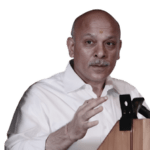
Shri Bhaskar Khulbe, a 1983-batch retired IAS officer of the West Bengal cadre, currently serves as Officer on Special Duty to the Government of Uttarakhand for the Badrinath-Kedarnath Corridor project. Since June 2022, he has overseen the reconstruction and development of the Badrinath and Kedarnath Dhams, acting as a key coordinator between the central and state governments. He previously served in the Prime Minister’s Office as Secretary to the Prime Minister and later as Advisor to Prime Minister Narendra Modi. He also played a role in supervising rescue operations during the 2023 Uttarkashi tunnel collapse.

Jitesh V. Patil, an IAS officer from the 2016 Telangana cadre, currently serves as the Collector and District Magistrate of Bhadradri Kothagudem district. He previously held the position of Collector in Kamareddy district. Patil is recognized for his commitment to sustainable rural development, notably promoting eco-friendly housing using local materials like mud and bamboo. He actively engages in community initiatives, including Swachhata Hi Seva campaigns, and advocates for preserving tribal heritage through environmentally conscious construction practices. His leadership emphasizes inclusive governance, environmental sustainability, and grassroots empowerment.
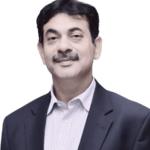
Jayesh Ranjan, a 1992-batch IAS officer of the Telangana cadre, is a senior public administrator who has played a central role in shaping the state’s growth across information technology, industries, tourism, culture, and youth development. As Special Chief Secretary to the Government of Telangana, he has overseen the Chief Minister’s Office Industry and Investment Cell and driven efforts to attract large-scale investments and strengthen the digital ecosystem. He earlier served as Principal Secretary for Information Technology and Industries & Commerce, and was awarded the Royal Order of the Polar Star by Sweden for investment facilitation.

Anita Karwal is a retired 1988-batch IAS officer of the Gujarat cadre and currently serves as Chairperson of the Gujarat Real Estate Regulatory Authority (RERA). She superannuated as Secretary, Department of School Education and Literacy, Government of India, and earlier served as Chairperson of the Central Board of Secondary Education. In Gujarat, she has held key roles including Chief Electoral Officer, conducting the 2012 Assembly and 2014 Parliamentary elections, and District Collector of Ahmedabad. An author of several books, she brings deep experience in education reform, governance, and regulatory leadership.
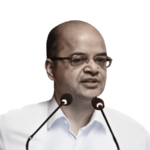
Dr. Rakesh Gupta is a 1997-batch IAS officer of the Haryana cadre with deep experience in public health, governance, and e-governance. He currently serves as Additional Secretary in the Ministry of Health & Family Welfare, Government of India, and previously served as Additional Secretary in the President’s Secretariat. An alumnus of IIT Delhi and Johns Hopkins University, he has led major health system reforms in Haryana under the National Health Mission, contributed to improvements in maternal and child health outcomes, and implemented technology-led governance initiatives. He is known for integrating policy design with community-driven implementation.

Abhishek Ranjan is an Innovation Officer with the Ministry of Education’s Innovation Cell (MIC), AICTE, Government of India. In this role, he supports national initiatives that strengthen innovation and entrepreneurship ecosystems across higher education institutions, including engagement with Institutional Innovation Councils (IICs) and student innovators. He regularly works with universities and colleges through outreach sessions and capacity-building engagements to accelerate campus-led innovation and startup pathways. His work focuses on enabling institutions to convert ideas into implementable initiatives by improving awareness, participation, and on-ground innovation activity across the country
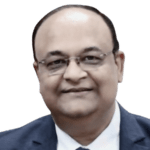
Anil Kumar Agarwal is a 1988-batch Indian Police Service officer who currently serves as a Member of the Competition Commission of India. With a distinguished career spanning policing, public administration, and regulatory governance, he has held several senior leadership roles at the national level. Prior to joining the Commission, he served as Director General of the Employees’ State Insurance Corporation and held Secretary-level positions in the Government of India. An alumnus of IIT Kanpur, IIM Bangalore, and Columbia University, he brings a rare blend of enforcement, economic regulation, and institutional leadership experience.

Nikhil Mahajan is a 2022-batch Indian Foreign Service officer currently serving as Under Secretary in the Americas Division at the Ministry of External Affairs, Government of India. Based in New Delhi, his work focuses on India’s diplomatic engagement with countries across the Americas. He secured All India Rank 80 in the UPSC Civil Services Examination 2021 and holds a B.Tech in Electrical Engineering from the Indian Institute of Technology Delhi. Motivated by an interest in public service and technology-driven policy, he represents a new generation of diplomats bridging technical expertise with foreign policy.
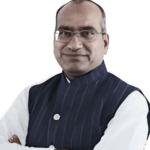
Sujeet Kumar is an Indian politician and public policy professional, currently representing Odisha in the Rajya Sabha. A member of the Bharatiya Janata Party, he earlier served as a Rajya Sabha MP from the Biju Janata Dal. Trained as a lawyer and arbitrator, he practices before the Supreme Court of India and various High Courts. He has served as Chairperson of the Rajya Sabha Committee on Petitions and held senior policy roles in the Government of Odisha. His work spans law, governance, technology, and development, and he is co-author of AI on Trial.

Shreyansh Kumat is an Indian Administrative Service officer of the Madhya Pradesh cadre with hands-on experience in district administration and grassroots governance. He currently serves as Chief Executive Officer of the Zila Panchayat, Ujjain, and has previously held the same role in Mandla district. Earlier, he served as Sub Divisional Officer (Revenue) and Sub Divisional Magistrate in Sausar. Prior to joining the IAS, he worked as a consultant with EY’s Business Advisory Services, contributing to strategy, market entry, and operational transformation projects.

Dr. Ashok Khemka, a 1991-batch IAS officer of the Haryana cadre, is renowned for his uncompromising integrity and commitment to clean governance. Over a distinguished 34-year career, he held a wide range of administrative positions across departments such as land records, transport, archives, and education. Known for taking principled stands against corruption, Khemka became a national figure after cancelling a controversial land deal in 2012. Despite facing over 50 transfers, he consistently prioritized transparency and public interest. Dr. Khemka retired from active service in April 2025, earning respect as one of India’s most upright and fearless civil servants.