
Sustainability Track
SUSTAINABILITY POLICY SPECIALIZATION
Every sustainability target is, eventually, a governance decision in disguise.
A four-month, practitioner-led specialization on how India’s climate, energy, resource and environmental decisions are actually made: through governance, finance, institutions and markets.
If you see yourself at the table designing the policy that cuts emissions, builds climate-resilient infrastructure, and moves capital toward a fairer energy transition : This is for you.

Applications Now Open
The field
WHAT IS SUSTAINABILITY POLICY?
Government decisions today sit at the intersection of economic reform, private interests, and development goals and sustainability policy is what lets a decision-maker navigate all three: the politics and economics behind a choice, whether that’s energy, water, industry, health, or climate.
This calls for two skill sets, built side by side:
– The method: Training in how policy actually gets made, the politics behind decisions, and the analytical tools to evaluate them.
– The substance: Real knowledge of the issues at stake: energy, water, industrial management, health, consumption and production, climate change, and how they connect to international relations.
The Sustainability track by Policy Pioneers is built to give you both. Through India’s own sustainability commitments, live case studies, and practitioners who work on these problems daily, you build the method and the substance together through the lens of India’s growth story.


The specialization
BUILT TO CLOSE THE GAP
Net-zero targets. ESG mandates. Carbon markets. Climate financing gaps.
India’s sustainability commitments are growing faster than the policy talent to act on them. This specialization is built to close that gap.
Over four months, you learn how sustainability decisions are designed, financed, governed and delivered. You are taught by practitioners, and you apply what you learn through a hands-on project with a serving officer, on a live policy question rather than a hypothetical one.
WHERE THIS SITS IN THE POLICY PIONEERS PROGRAM?
The Sustainability specialization is one track within Policy Pioneers. Alongside the domain modules, every participant covers the common program:
Self-assessment
IS THIS THE RIGHT TRACK FOR YOU?
Sustainability is not only for environmentalists. It is for anyone curious about how a country balances growth and environment, and why that is so hard in practice.
This is for you if
- ✓You have felt climate change in your own life, through erratic weather, water, air quality or heatwaves, and want to understand the policy side of it, not just live through it
- ✓Tracing the money, through climate finance, carbon markets and ESG, interests you as much as the environment does
- ✓You are more curious about why policies succeed or fail than about activism or awareness campaigns
Probably not for you if
- ✕You want a technical qualification in environmental science or engineering. This is a policy programme
- ✕You want a certificate without the work. The programme is project-based and demanding
- ✕You are looking for guaranteed placement. The programme builds capability and network. It does not place candidates
QUESTIONS YOU WILL WORK ON
Curriculum
SIX MODULES, FROM PROBLEM TO DELIVERY
Sustainability sits where climate, governance, economics, finance, technology and society meet. The modules move from understanding the problem to designing and delivering a response.

Sustainability in the Indian context
India’s traditions and current realities, & where community stewardship and local knowledge do or do not translate into modern policy.
Indic perspectivesCommunity stewardshipLocal knowledge

Climate and environmental governance
How governments regulate and manage climate and how responsibility is divided between institutions.
Adaptation and mitigationRegulationWater governance

Circular economy and resource security
How policy can cut waste, improve resource efficiency and reduce exposure to supply shocks.
Circular economyWaste governanceResource efficiency

Climate finance, ESG and carbon markets
How the transition is paid for, and how investors, companies and regulators respond to climate risk.
ESG MandateClimate Financing Carbon Credits
The geopolitics of sustainability
How climate diplomacy, energy security and trade rules shape what a country can and cannot do domestically.
Climate DiplomacyEnergy Security

Policy design and implementation
What makes policy succeed in practice: design, agreement, behaviour change, and measuring results.
Climate Governance Design Thinking
Hands-on projects
SUSTAINABILITY IN PRACTICE
Past Policy Pioneers’ Cohort worked alongside bureaucrats and practitioners on live policy problems.
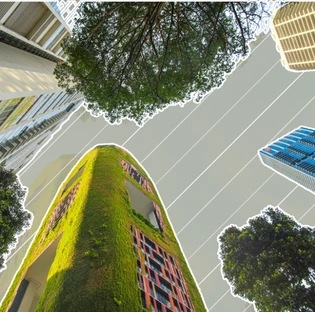
Building climate-resilient cities
Indian cities generate around 75% of the country’s GDP and take the worst of flooding, heatwaves and air pollution. This project built a framework for climate risk mapping, green budgeting and citizen-led stewardship.
Additional Director, AIIMS Delhi

climate playbook for India’s districts
573 of India’s 718 districts are classified as climate hotspots. This project produced a handbook for coastal, arid, hilly and northeastern terrain, with adaptation and mitigation pathways District Commissioners can act on.
Collector and District Magistrate, Bhadradri Kothagudem
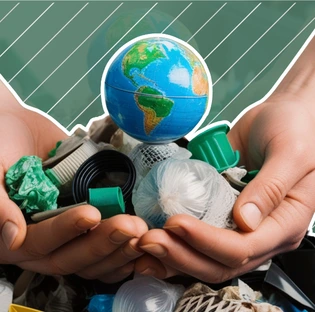
Fixing the plastic waste gap
India recycles around 30% of the 3.5 million tonnes of plastic waste it produces each year, and hill towns like Almora fall between jurisdictions entirely. This project designed a governance framework to close the accountability gap.
OSD to the Uttarakhand Government
Faculty
TAUGHT BY PEOPLE WHO DO THE WORK
Sessions are led by people who work in policy rather than only teach it: civil servants, regulators, researchers, financiers, and practitioners from industry and the development sector.

Erik Solheim
Former Under-Secretary-General, United Nations · Former Executive Director, UN Environment Programme

Abhishek Jain
Fellow and Director, Green Economy and Impact Innovations, CEEW
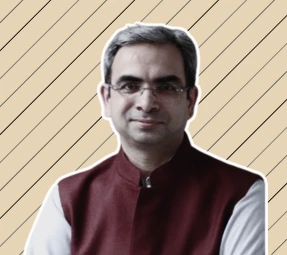
NITIN BASSI
Senior Programme Lead, Sustainable Water, CEEW

Jayraj Pandya
ESG Manager, European Energy

Ankit Todi
Chief Sustainability Officer, Mahindra Group

ARJUN DUTT
Senior Programme Lead, CEEW Green Finance Centre
Careers
The specialization builds capability rather than placing candidates. You leave with a working understanding of how sustainability policy is made in India, practical experience of applying it, and a network of people doing the work.
Think tanks and research
Policy and research roles in research institutions, building the evidence base for sustainability policy
Government and public bodies
Regulatory and programme roles in ministries, regulators and state departments
Corporate and finance
Sustainability, ESG and climate risk roles in companies and financial institutions
CONSULTING
Advisory roles in sustainability and public policy practice, helping organisations respond to new rules
DEVELOPMENT SECTOR
Programme and advocacy roles in development organisations and grassroots delivery
FURTHER STUDY
Advanced degrees in public policy, environmental policy or development, with a working foundation
Program details
DATES, FORMAT AND FEE
Key details
| Dates | Winter Cohort: December 2026 to April 2027 Applications close: 6 September 2026 |
| Format | Blended. Live online sessions plus 2 in-person camps. |
| Time Commitment | 10-12 per week |
| Eligibility | Open to graduates, postgraduates, and working professionals from any discipline. |
| Selection | Sign up → Application → Shortlisting → Personal interview → Selection |
Fee and scholarships
| Fee | Rs. 59000 + 18% GST |
| Scholarships | Need- and merit-based scholarships available, up to 75%. |
| Payment | Flexible payment plans, including instalments, are available. |
APPLY TO THE WINTER COHORT
The Sustainability Policy Specialization runs from December 2026 to April 2027. Applications close on 6th September.