
A decade ago, public policy in India was a niche space, largely associated with the civil services, academia and a small circle of Delhi-based think tanks. Wrapped in jargon and hierarchy, policymaking felt distant and inaccessible to young people.
Today, that landscape looks very different.
The number of public policy master’s and executive programs grew from eight in 2012 to at least 37 by 2022.
Governments recruit through fellowships, consultancy roles and lateral entry, while universities, nonprofits, philanthropic organisations and companies build policy teams.
At the heart of this shift are India’s youth in action. Curious about governance, eager to contribute and impatient with the status quo, they are entering policy with energy and ambition. Public policy is no longer an obscure domain reserved for a select few.
It is becoming a credible pathway to nation-building and shaping India’s future.
We examine how young people discover policy, what motivates them, how they build careers, the gaps limiting participation and what India must do to enable them to act in policy.
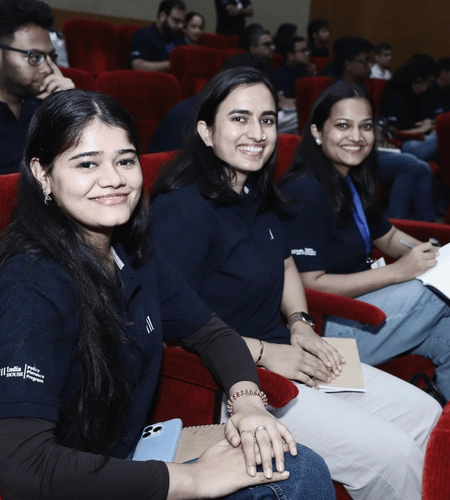
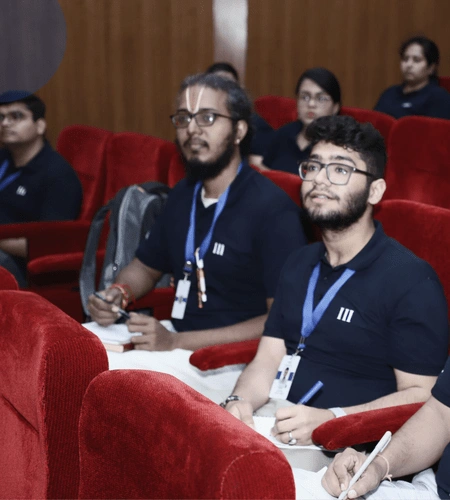
The Beginnings: Learning What Policy Means
The first encounter with public policy rarely happens in an organized manner. Some students encounter it in senior school through political science, economics or current affairs. Most, however, do not recognize it as a distinct field until college.
Internships often provide the first serious exposure, moving students from reading policy to practising it. NITI Aayog’s year-round internship program remains among the most popular routes into government policy work.
Think tanks such as ORF, Vidhi, CPPR, CCS and CCG offer internships in research, legal analysis and advocacy.
Policy consultancies, nonprofits and corporate public affairs teams provide exposure to regulation, stakeholder engagement and program implementation.
Organisations such as India House and PPI also introduce young people to the field through programs such as Start Thinking in Policy and campus events such as PPI Talks.
The Motivations: Why Young People Are Drawn to Policy
Our interactions with policy aspirants and applicants to India House programs suggest that impact and nation-building remain the primary motivations.
More than half of applicants and cohort members cited impact, consistently across age, gender and experience.
This is an encouraging sign for a country seeking to harness its demographic dividend.
This extends beyond our cohort.
Deloitte’s 2026 India survey found that 99 per cent of Gen Z respondents and 98 per cent of millennials considered purpose important to job satisfaction. Public policy offers a strong route to channel this desire.
Motivations also vary by field of study. Law remains the most common specialization, reflecting policy’s legislative and regulatory focus, though more young people from engineering and technical backgrounds are entering the field, which is encouraging.
Public policy degrees also offer an alternative to traditional professional qualifications. For many, a Master’s in Public Policy is emerging as an alternative to the MBA, which is often perceived as saturated.
Training and Building a Career: How Young People Act in Policy
Once curiosity turns into intent, young people begin building careers in policy. With no single entrance examination, qualification or established ladder, many turn to formal training.
For nearly six decades after Independence, policy education remained embedded in public administration courses for government aspirants and officials. Over the past two decades, public policy programs have opened the field to students and professionals from diverse backgrounds.
Master’s programs at IIT Delhi and the National Law School of India University, specialized institutions such as the Indian School of Public Policy, and shorter applied programs such as India House’s Policy Pioneers Program have created clearer pathways into the field.
Many, however, enter without specialised training and acquire skills on the job. This reflects the sector’s versatility. Unlike careers requiring fixed qualifications, entry-level policy roles often value research, writing, subject knowledge and curiosity over prior policy experience, allowing young people to contribute soon after graduation.
The sector also rewards a multidisciplinary approach, which is less common in many other fields.
Perspectives from economics, law, engineering, systems thinking and design thinking are considered valuable assets.
Career pathways are diverse. Many enter as Young Professionals in government or as Consultants and Associates in the private sector. Fellowships have also become popular. The LAMP Fellowship by PRS and Chief Minister fellowship programs allow young people to work with legislators, policymakers and bureaucrats early in their careers.
Most encouragingly, public policy opportunities have expanded significantly over the past decade. Today, more than eight states run Chief Minister fellowship programs, more than 20 ministries and departments have recruited Young Professionals, and an increasing number of entry-level positions are opening across the sector.
Tracing the Gaps: Why Much Remains to Be Done
Despite the changing landscape, significant gaps remain. Career aspirations are still centred on conventional government pathways, while alternative policy careers lack comparable social validation. A 2023 Lokniti-CSDS study found that 61 per cent of young Indians preferred government employment over private jobs or entrepreneurship.
Early-career stability is another concern. An unhealthy pattern of “fellowship hopping” is emerging, with young professionals moving between short-term opportunities because the sector lacks a structured career ladder. This creates uncertainty around tenure and progression. Only a few move into senior roles, while many remain at the lower rungs.
Demand has not kept pace with the growing supply of aspirants.
A policy institution may receive more than 200 relevant applications for a single entry-level opening.
Curriculum design for early-career public policy programs also remains challenging. Curricula and policy frameworks continue to draw heavily from the West, raising questions about their applicability to India.
Public policy also remains poorly defined as a profession. Young people may enter without understanding the nature of the work, their place in the ecosystem or how entry-level roles can lead to sustainable careers.
Future Outlook: Enabling Youth Action in Policy
Young people’s enthusiasm for policy is increasingly visible on social media, where they analyse decisions, question outcomes and debate governance and social change. How can India translate this interest into meaningful action?
The first task is to convert enthusiasm into capability. Policy education must become more accessible, applied and grounded in Indian realities, combining research, data, writing and communication with field immersion, practitioner engagement and live public problems. Curricula should develop Indian case studies, strengthen areas such as ethics, technology and health policy, and draw from the experiences of governments and communities.
The second task is to convert capability into credible opportunity. Young people need clearer career pathways, structured internships, mentorship and stable entry-level roles across government, universities, think tanks and companies, including beyond major cities. Fellowships should lead to longer-term opportunities, employers need clearer competency frameworks, and India must track policy jobs, compensation and career progression. The goal is not to create more policy commentators, but to develop professionals equipped to research, design, implement and evaluate policy.
Finally, India must inspire young policy professionals to pursue higher ideals, not merely career advancement. Nation builders such as Swami Vivekananda can inspire pride, zeal and a spirit of seva in public life.
India’s youth are ready to shape public policy. The task now is to build an ecosystem that guides their ambition, deepens their capability and sustains their contribution.