THE BEST OF INDIA, FOR INDIA.
Real-World Projects | Purposeful Innovation | Nation-Building Leadership
Hands-On Projects (HOPs) are real-world, learner-led challenges embedded in our Policy Pioneers Program. Each HOP places participants in the pilot’s seat of policymaking — exposing them to the practitioner’s lens while they work on real-world challenges.
At each term:
- Concepts from the curriculum are tested in real-world settings.
- Hands-on projects reflect and reinforce curriculum learning.
- Feedback loops strengthen understanding and delivery.
- Systemic thinking is practised, not just studied.
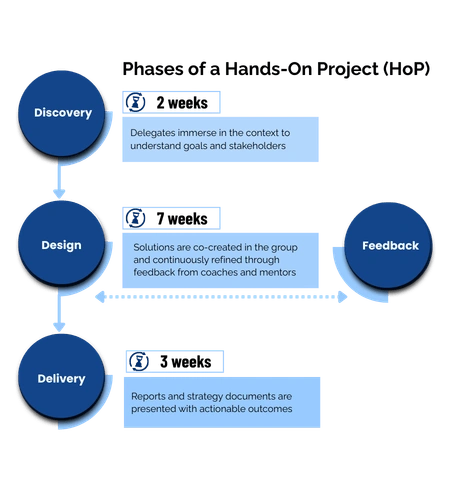
Where Policy Meets Practice: Hands On-Projects 2026

Mission Tap Assurance: A Pilot-Ready Model for Functional 24x7 Rural Water Supply
Shri Bharat Lal, Secretary General and CEO, National Human Rights Commission (NHRC), India (Retd., Indian Forest Services, Batch of 1988)
Context: India has made significant strides in rural tap-water infrastructure through the Jal Jeevan Mission, providing access to tap water for over 15.72 crore rural households (81% of rural homes) as of 22 October 2025. However, the focus has shifted from connection coverage to ensuring reliable tap-water services. Challenges such as irregular supply, low pressure, poor quality, and unclear accountability persist.
Challenge: The Fifteenth Finance Commission proposed ₹2,36,805 crore for Rural Local Bodies from 2021–22 to 2025–26, aimed at enhancing drinking water, sanitation, and water management. A critical question is how to ensure every household can access safe, sufficient, and reliable water.
Description: This project will design a 24×7 Village Water Assurance Model for 2–3 village types, including those with inconsistent supply, electricity issues, or source sustainability challenges. For each type, the project will analyze the entire water system, including sourcing, infrastructure, and community oversight. The final model will integrate technical, financial, governance, and monitoring aspects for implementation by Gram Panchayats and other stakeholders.

Case Study Compendium for Model Solar Villages and Incentive Designs for PM Surya Ghar
Mentor: Shri Mir Mohammed Ali, Director, Ministry of New and Renewable Energy, India (IAS, 2011)
Context: The Ministry of New and Renewable Energy’s Model Solar Village initiative seeks to establish one model solar village per district through a competitive selection process, awarding ₹1 crore to the top village. This aims to promote distributed renewable energy and community participation.
Challenge: There is limited understanding of successful adoption cases and the operationalization of this initiative. A systematic framework is needed to replicate successes and align incentives with community engagement.
Description: The project will develop a case study compendium, replication framework, and incentive model for solar villages. Key outcomes include documenting model locations, analyzing success factors, and designing incentives for stakeholders.
Additionally, a PM Surya Ghar cost-benefit calculator will help households assess rooftop solar viability, providing financial estimates and guidance for informed decision-making.

From Recommendation to Reform, A Systems Lens on Police Reform in India
Shri Ashok Kumar, VC, Sports University, Haryana; IPS (Retd.) (1989)
Context: Police reform in India has been debated for decades through various commissions, parliamentary reviews, and Supreme Court directions. Common issues include political interference, weak accountability, poor investigation quality, staffing gaps, and limited institutional autonomy. Despite existing recommendations, implementation has remained inconsistent.
Challenge: The key issue is transitioning reform recommendations into actionable administrative changes. Three systemic gaps contribute to this problem:
1. Reform Congestion: Overlapping recommendations lack prioritization.
2. Weak Implementation: Legislative pathways are often unclear.
3. Systemic Resistance: Recommendations encounter entrenched interests.
Description: There’s a need for a systems-based framework to identify actionable police reforms, understand factors for success or failure, and outline implementation strategies. This project aims to analyze police reform recommendations in India through a systems lens, producing a prioritized reform brief for policymakers.

Technology Integration Playbook for Urban Development Corporations
Shri Debashis Sen, Founder Director & CEO, New Bengal Consulting; Former Additional Chief Secretary (IT) – West Bengal, IAS (RR: 1985)
Context: Urban development corporations across India are leading the development of new cities, townships, and growth corridors. Many of these institutions are already using digital tools for planning, monitoring, and service delivery. With the emergence of technologies such as AI, IoT, and blockchain, there is an opportunity to further strengthen how technology supports urban development and governance.
Challenge: Development corporations are adopting technology across different functions, with approaches varying across cities and projects. Building on existing initiatives, there is value in creating a structured understanding of how emerging technologies can be applied across planning, project execution, service delivery, and governance processes in a coherent manner.
Description: This project aims to develop a practical playbook for urban development corporations by analysing how emerging technologies are currently being integrated into city governance. Learners will study selected city-level examples, for instance, how Mumbai has used sensor-based air quality monitoring at construction sites.
Based on this, they will document implementation approaches, enabling conditions, and observed outcomes, and synthesise these into a clear framework that explains how technologies such as AI, IoT, and digital platforms can be aligned with urban functions like planning, monitoring, citizen interface, and institutional coordination.

Playbook on SHG-to-MSME Transition
Shri Balamurugan D, IAS (2005), Joint Secretary, Ministry of Corporate Affairs
Context: India has developed a large livelihood ecosystem through Self-Help Groups (SHGs), the National Rural Livelihoods Mission (NRLM), and initiatives like Jeevika, enabling income generation and financial inclusion. However, the transition from livelihood activities to sustainable enterprises is weak, with many SHG members operating at subsistence levels and facing barriers to scale and market integration.
Challenge: The main issue is not the lack of schemes but insufficient transition pathways:
– No structured “graduation pathway” from SHG to enterprise
– Beneficiaries encounter credit misuse, market access issues, compliance barriers, and social constraints
– Policy support is fragmented without a district-level convergence mechanism
– Early-stage enterprises struggle in their first 0–2 years due to weak support
Description: This project aims to identify failure points in the livelihood-to-enterprise journey and develop a district-level enterprise transition model by:
– Mapping the end-to-end SHG member journey and pinpointing transition failures
– Analyzing drop-off nodes like credit usability, market linkages, compliance, and social barriers
– Examining policy and institutional fragmentation across relevant systems
– Investigating operational and compliance bottlenecks in early enterprise stages

A District Playbook for building Forest Districts as Livelihood and Biodiversity Hubs
Shri Puneet Nayyar (Indian Forest Service, RR-2010), Gujarat Forest Department
Context: India’s forest ecosystems support over 10 crore forest-dependent people, with Non-Timber Forest Produce (NTFP) contributing to an estimated ₹50,000+ crore annual economy. Government interventions such as TRIFED’s MSP for MFP and Van Dhan Vikas Kendras (3,000+ clusters) have expanded procurement and primary processing. At the same time India’s protected areas and biodiversity zones are witnessing rising tourism demand. Example: Kaziranga recorded the highest-ever footfall in 2024.
Despite this,
– Forest districts lack integrated economic planning frameworks
– Livelihoods, conservation, tourism, and enterprise development operate in silos
– Community ownership remains weak, with many models still contractor-driven
– Biodiversity zones are protected, but not always economically integrated with local communities.
Challenges: Forest-based economic development in India is fragmented and narrowly designed. Key challenges include:
– Communities capture low value from resources.
– Lack of structured pathways from collection to market.
– Over-reliance on isolated solutions.
– NTFP programs, eco-tourism, and restoration efforts operate separately.
– Absence of biodiversity-linked economic models.
– Protected areas create tourism value but have limited local livelihood benefits.
– Institutional fragmentation with disconnected efforts from various departments.
– Limited district-level planning and no clear guidelines for designing integrated forest economies.
Description: This project aims to develop a District Playbook for Forest-Based Livelihoods and Conservation Economy, combining value addition, biodiversity protection, and enterprise development.
Case Study on Public Asset Monetisation in India and Pathways for Scale
Smt. Alka Upadhyaya (IAS: 1990), Secretary, National Commission for Minorities, Ministry of Minority Affairs, Former Secretary, MoRTH; Former Secretary, Animal Husbandry, Government of India
Context: India is pursuing a significant asset monetisation initiative through the National Monetisation Pipeline (NMP), aiming to monetise assets worth ₹6 lakh crore in sectors like roads, railways, power, and ports. The highways sector has taken the lead, with NHAI using Toll-Operate-Transfer (TOT) and Infrastructure Investment Trusts (InvIT) to attract global institutional investors. This monetisation supports capital recycling for new infrastructure. However, many sectors and states face challenges with limited adoption, and there is an uneven understanding of how to effectively design and scale monetisation efforts.
Challenge: While asset monetisation has gained policy traction, its implementation remains uneven and difficult to replicate.
– Absence of a standardised playbook for ministries and states
– Variation in asset readiness, valuation, and legal clarity
– Limited institutional capacity outside a few agencies like NHAI
– Political and public perception challenges around monetisation
– Inconsistent investor response across sectors and bundles.
Description: This project will study India’s asset monetisation journey through a set of focused case studies and system-level analysis.
A Case Compendium for Governance in India’s Border and Security-Sensitive Districts
Shri Jarnail Singh (Retd. IAS, 1974 Batch), Former CEO, Organising Committee, CWG 2010
Context: India’s border districts are among the country’s most complex governance environments, where development priorities intersect with national security, infrastructure, livelihoods, mobility, identity, and inter-agency coordination. Unlike regular districts, decisions on roads, schools, healthcare, tourism, markets, and connectivity often have both developmental and security implications.
The scale is substantial. The Border Area Development Programme covers 396 border blocks across 111 districts in 16 states and 2 Union Territories. The Vibrant Villages Programme-I targets 662 villages across 19 northern border districts, while Vibrant Villages Programme-II expands development support to additional border villages.
Despite this, practical governance knowledge from these regions remains dispersed across individual experiences and institutional records. Capturing these lessons as structured case studies can create a valuable resource for future administrators.
Challenge: The challenge is that practical lessons from senior administrators who have worked in such contexts are rarely converted into reusable institutional knowledge. Insights on civil-security coordination, community trust, local legitimacy, crisis handling, and development under constraints often remain person-specific.
Description: This Project aims to develop a case compendium on governance in India’s border and security-sensitive districts. It will document 4–6 case studies using secondary research, public documents, accessible interviews, and mentor-guided reflections.
Healthcare Accessibility Framework for Hilly Districts
Shri Abhishek Saini, IAS (RR:2021) Deputy Commissioner, North Garo Hills, Meghalaya
Context: Healthcare access in hilly districts poses significant administrative challenges due to geography and sparse populations. National norms adjust for these areas, requiring a Public Health Centre for every 20,000 people, compared to 30,000 in general rural areas. Similarly, a Community Health Centre is needed for every 80,000 in hilly regions versus 1,20,000 elsewhere. The National Health Mission has set a “time-to-care” norm, ensuring Sub-Health Centres are reachable within 30 minutes on foot.
Challenge: Hilly districts not only need more facilities, they also need a better access architecture. The core bottlenecks are weak referral systems, difficult transport, fragmented follow-up, irregular specialist availability, and poor integration between mobile health units, telemedicine, PHCs, CHCs, and district hospitals.
Description: This project will design a Healthcare Accessibility Framework for Hilly Districts, using North Garo Hills as an anchor case and benchmarking comparable models from Northeastern and Himalayan regions.
The project will map how a patient moves from village to Sub-Centre, PHC, CHC, district hospital, and higher referral centre, and identify where the system breaks down. It will focus on practical district-level solutions across four layers Reach, Referral, Continuity, and Governance.
A Playbook on Sustaining Public Assets in North Chennai
Shri Ravi Teja Katta, IAS (RR:2020) Regional Deputy Commissioner (North), Greater Chennai Corporation (GCC)
Context: North Chennai has seen major investments in parks, reading zones, lakefronts, public spaces and recreation facilities. Chennai city has ~632 parks overall, of which ~142 are in the northern zone alone, including Tiruvottiyur, Manali, Madhavaram, Tondiarpet and Royapuram. GCC piloted Reading Zones in 10 parks in North Chennai and planned expansion to 36 citywide after initial uptake. While GCC manages parks, playgrounds, traffic islands, and open spaces, citizen satisfaction, consistent programming, and long-term usability remain weak, highlighting the need for a structured public asset governance framework.
Challenge: The problem is not the creation of public assets but ensuring that they remain active, safe, maintained, inclusive and citizen-owned. There is a need for a practical, actionable framework that delineates maintenance responsibilities, citizen participation roles, grievance mechanisms, ward-level monitoring, and low-cost program design to increase public use and ownership.
Description: This project will develop a Public Asset Governance Playbook to strengthen the management, maintenance, and activation of public assets. It will establish clear roles for civic agencies and citizens, create mechanisms for monitoring and grievance redressal, and design models to prevent misuse and encourage community participation. The project will also pilot the framework across selected public assets in North Chennai through a 100-day implementation plan.
Preventing Land Disputes Before They Reach Revenue Courts: A Citizen-to-Administration Framework
Shri Vasant Dabholkar, IAS (RR:2023) Deputy Collector, Bardez, Goa
Context: Bardez district faces recurring land disputes due to unclear inheritance patterns, delayed mutations, informal family arrangements, survey mismatches, unverified land sales, and poor citizen understanding of revenue records. Goa’s revenue offices handle approximately 200–250 land mutation cases per month in Bardez, and anecdotal evidence suggests over 40% of disputes reach formal revenue courts unnecessarily due to early mismanagement. While public laws provide clear procedural guidance, citizens and local panchayats often lack structured mechanisms to prevent disputes at the source.
Challenge: The key challenge is to create a preventive system that enables early identification of risky land transactions, provides citizen guidance, and coordinates timely administrative interventions through panchayats and revenue offices before cases escalate to courts.
Description: This project will develop a Preventive Land Dispute Framework that combines administrative processes with citizen engagement to reduce conflicts before they escalate. It will identify dispute patterns and early-warning indicators, create citizen advisory tools and SOPs for local authorities, and establish communication channels between communities and the administration. The framework will be piloted in 2–3 villages in Bardez to assess its effectiveness and scalability.
Best Practices Book for UDID to Benefits Access - Strengthening Last-Mile Entitlement Delivery for Persons with Disabilities
Shri O. Anand, IAS, (RR:2016) Collector & District Magistrate, Ananthapuramu
Context: The UDID system is intended to create a unified identity layer for persons with disabilities, making certification and access to benefits easier. But the real governance challenge begins after the card is issued. For many persons with disabilities, the problem is not only getting a UDID card. It is whether the card actually helps them access pensions, assistive devices, education support, health services, transport concessions, livelihood schemes, skill development, employment support, and other entitlements.
Challenge: There is often a conversion gap between UDID registration and actual benefit access, arising due to low awareness among beneficiaries and families, fragmented schemes across departments, documentation and digital barriers, weak follow-up after certification, limited convergence between health, social welfare, education, employment, transport, and skill departments, and lack of dashboard-based tracking from “identified” to “benefitted”.
The challenge is to design a practical system where persons with disabilities are not only certified but are also actively linked to relevant benefits.
Description: This project will create a UDID to Benefits Access Best Practices Book, anchored in Ananthapuramu but designed to be useful for other districts as well.
The project will map the full journey of a person with disability, from identification and certification to actual benefit access. It will identify drop-off points and document best practices that districts can adopt to improve entitlement delivery.
Bridging the Atal Tinkering Labs and Institute Innovation Cell: Building a School-to-College Innovation Continuum
Shri Abhishek Ranjan, Innovation Officer, Ministry of Education’s Innovation Cell, AICTE, Govt. of India
Context: The Atal Tinkering Lab (ATL) program has created over 9,000 labs in schools across India, exposing students to hands-on STEM, design thinking, and innovation activities. However, research and anecdotal evidence show that many school innovators struggle to continue their ideas beyond school. Bridging this school-to-college innovation continuum is critical to foster a robust innovation pipeline for students transitioning from school to Institute innovation Cells (IICs) in Higher Education Institutes.
Challenge: The key challenge is that school-level innovation exposure often remains disconnected from higher education resources. Without structured support, mentorship, and access to college-level labs, many student projects fail to progress, losing both talent and the opportunity for regional or national innovation impact.
Description: This project will develop an ATL-to-IIC Bridge Model to create a seamless pathway from school innovation to college incubation and mentorship. It will establish mentorship structures, shared access to prototyping facilities, and collaborative engagement between school and college innovators. The framework will also define safety guidelines, annual engagement plans, and outcome metrics to ensure continuity in student innovation journeys.
Preliminary Mobility and City Logistics Plan for Greater Ludhiana Area Development Authority (GLADA)
Shri Ojasvi Alankar, IAS (RR:2020) Additional Chief Administrator, Greater Ludhiana Area Development Authority (GLADA), Ludhiana, Punjab
Context: Ludhiana is Punjab’s manufacturing capital, with a large industrial base in bicycles, textiles, hosiery, auto components, machine tools, and MSMEs. Its transport challenge is therefore twofold: moving people efficiently and moving goods reliably.
The existing Comprehensive Mobility Plan already highlights the need for better public transport, road hierarchy, last-mile connectivity, and safer movement systems. Meanwhile, central investments under highways, expressways, and PM GatiShakti are improving regional connectivity. The risk is that city roads, industrial access routes, freight corridors, and local choke points may become the weak link.
Description: This project will create a preliminary mobility and logistics diagnostic for Ludhiana and the GLADA region. It will rely mainly on existing plans, Google Maps, public datasets, news reports, satellite imagery, and online stakeholder consultations.
The project will focus on two questions:
1. Urban Mobility: Where are Ludhiana’s key road, public transport, last-mile, and congestion gaps?
2. City Logistics: Where are freight movement, industrial access, truck movement, loading/unloading, and highway-city linkages breaking down?
Municipal Operations Toolkit for Pilgrim Cities
Shri Rahul Meena, IAS (RR:2021) Municipal Commissioner, Rajamahendravaram Municipal Corporation
Context: Rajamahendravaram is gearing up for Godavari Pushkaralu 2027, a significant river pilgrimage occurring every twelve years that draws many devotees to the Godavari region. This event serves not only as a cultural and religious occasion but also as an urban governance challenge involving riverfront management, sanitation, public health, and emergency preparedness.
This event presents a crucial opportunity for establishing a well-organized approach to managing pilgrimage cities responsibly.
Challenge: The challenge is to translate large-scale preparations across ghats, mobility, sanitation, water supply, public health, emergency response, vendor management, temporary infrastructure, and public communication into a unified municipal operating model.
Description: This project will develop a municipal operations toolkit for managing sanitation, water, waste, riverfront cleanliness, mobility support, vendor management, and citizen-facing services during large pilgrimage events. Rajamahendravaram and Godavari Pushkaralu 2027 will serve as the anchor case, while the final output will be designed to be adaptable for other pilgrim cities and urban local bodies.
Powering Indian Economy and Trade through Geographical Indicators
Shri Bhaskar Khulbe Ji (IAS: 1983). Former Advisor to the Prime Minister’s Office
Context: Geographical Indications (GIs) serve as a powerful catalyst for the Indian economy and trade by legally protecting and commercializing the nation’s rich repository of traditional knowledge, diverse cultural heritage, and region-specific agricultural and handicraft products. By granting intellectual property rights to unique goods like Darjeeling tea and Kancheepuram silk, GI frameworks transform local resource advantages into distinct market advantages, ensuring product authenticity and building international consumer trust. Ultimately, leveraging GIs allows India to strategically position its high-value, culturally authentic exports in competitive global markets, driving robust foreign trade and equitable economic growth, especially for small businesses, families and artisans, while promoting cultural conservation.
Challenge: Geographical Indicators are not yet seen as Intellectual Property but are seen as tradeable commodity markers. This is in stark contrast to global practices such as the DoP label of Europe and associated policies. Lack of awareness of the legal frameworks associated with GI’s has also created hurdles for its adoption by stakeholders. Schemes associated with the idea of GI’s such as One District One Product (ODOP) or District as Export Hubs (DEHs) have met with limited success.
Description: This project will undertake a comprehensive study of India’s Geographical Indications (GI) ecosystem, examining legal and institutional gaps, global best practices, and the socio-economic impact of GIs on trade and livelihoods. It will also assess the effectiveness of allied government initiatives and develop recommendations to strengthen GI-led regional development and value creation.
MENTOR DETAILS

Bharat Lal is a 1988-batch Indian Forest Service officer of the Gujarat cadre and currently serves as Secretary General and CEO of the National Human Rights Commission. With over three decades of distinguished public service, he has held several senior leadership roles, including Director General of the National Centre for Good Governance and Secretary to the Lokpal of India. As the founding Mission Director of the Jal Jeevan Mission, he played a pivotal role in advancing rural water access, governance reform, and inclusive public service delivery.

Mir Mohammed Ali is a 2011-batch IAS officer of the Kerala cadre and currently serves as Director at the Ministry of New and Renewable Energy. An engineering graduate from Anna University, he is known for combining technology with governance innovation. As District Collector of Kannur, he led pioneering initiatives in plastic waste reduction and information literacy. A Harvard Kennedy School Fulbright-Nehru Fellow, he has received multiple e-governance awards for advancing evidence-based and technology-driven public service delivery.
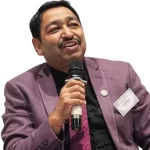
Ashok Kumar is a retired 1989-batch IPS officer who served as Director General of Police, Uttarakhand. An alumnus of Indian Institute of Technology Delhi, he is a noted author and security expert with extensive experience in policing and internal security. A former All-India Police Badminton Champion, he has remained deeply connected to sports administration. As Vice Chancellor of Haryana Sports University, he is focused on building academic excellence and strengthening India’s sports ecosystem for global competitiveness.
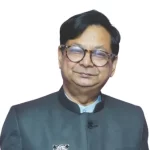
Debashis Sen is a retired 1985-batch IAS officer best known for leading the development of New Town Kolkata into India’s first Platinum-rated green smart city during his decade-long tenure as Chairman of WBHIDCO. Over a 34-year administrative career, he served as Additional Chief Secretary for Information Technology and Urban Development, and as Chief Electoral Officer of West Bengal. He currently leads New Bengal Consulting and is an active advocate for AI adoption, smart urban infrastructure, and technology-led governance.
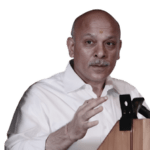
Bhaskar Khulbe is a retired 1983-batch IAS officer of the West Bengal cadre, with over three decades of distinguished service in public administration. He holds degrees in Botany and Zoology, along with a Master’s in Social Policy and Planning from London School of Economics and Political Science. He served in several senior leadership roles across state and central governments, including Secretary, Chief Electoral Officer, and District Magistrate, and most recently as Advisor in the Prime Minister’s Office.

Puneet Nayyar is a 2010-batch Indian Forest Service officer of the Gujarat cadre, currently serving as Conservator of Forests, Surat Circle. He is known for pioneering community-led conservation models that integrate ecological protection with livelihood generation. His notable Visdalia initiative empowered tribal communities through sustainable bamboo enterprises under the Vinaan brand, reducing dependence on forest exploitation while enhancing incomes. His work reflects a strong commitment to environmental stewardship, social forestry, and inclusive, sustainability-driven development.
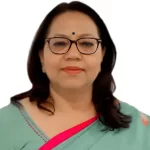
Alka Upadhyaya is a 1990-batch IAS officer of the Madhya Pradesh cadre. She holds postgraduate degrees in Chemistry and Economics, along with a graduate degree in Biology from Jiwaji University. Over a distinguished career spanning three decades, she has held several leadership positions across the Government of India and the Government of Madhya Pradesh. In the Ministry of Road Transport and Highways, she was instrumental in the Asset Monetization Plans. She has also held a position in the Department of Animal Husbandry and other roles such as Secretary, Additional Secretary, Joint Secretary, CEO, and District Collector. She is widely recognized for her contributions to public administration, governance reforms, and e-governance initiatives.

Jarnail Singh is a retired 1974-batch IAS officer of the Manipur–Tripura cadre with over 35 years of distinguished public service. He served as Chief Secretary of Manipur, Secretary (Border Management) in the Ministry of Home Affairs, and Joint Secretary to the Prime Minister across four Prime Ministers’ tenures. He was also appointed CEO of the Organising Committee for the 2010 Commonwealth Games during a critical restructuring phase. A graduate of Harvard University in public administration, he is also an accomplished author on governance and Manipur.

Abhishek Saini is a 2021-batch IAS officer of the Assam–Meghalaya cadre and currently serves as Deputy Commissioner of North Garo Hills District. A medical doctor by training, he holds an MBBS degree from All India Institute of Medical Sciences. He is known for community-driven governance innovations, including the Red Food Day initiative to combat anaemia and improve nutrition among women and children. His work reflects a strong focus on public health, grassroots participation, and evidence-based district administration.

Abhishek Ranjan is an education and public policy professional currently serving as Innovation Officer at the Ministry of Education’s Innovation Cell, All India Council for Technical Education. He works to strengthen India’s innovation and entrepreneurship ecosystem through initiatives such as Institution’s Innovation Council, Smart India Hackathon, and ATL mentoring. With extensive experience in school transformation across multiple states and aspirational districts, he brings deep expertise in education reform, youth development, and large-scale policy implementation.

Vasant Prasad Dabholkar is a 2023-batch IAS officer of the AGMUT cadre, currently serving as Deputy Collector, Bardez, in the Government of Goa. A Mechanical Engineering graduate from University of Mumbai, he previously served as Assistant Commissioner in the Andaman and Nicobar Administration and as Assistant Secretary in the Ministry of Tourism, Government of India. As a young civil servant, he brings strong analytical capability and a growing understanding of governance, public administration, and policy implementation across diverse administrative contexts.

Katta Ravi Teja is a 2020-batch IAS officer of the Tamil Nadu cadre, currently serving as Commissioner of the Coimbatore City Municipal Corporation. As one of the younger officers in the civil services, he is engaged in urban governance in one of Tamil Nadu’s fastest-growing cities. His work focuses on strengthening municipal administration, civic infrastructure, service delivery, and city-level governance, with experience in managing complex urban systems and improving citizen-facing public services.

Ojasvi Alankar is a 2020-batch IAS officer of the Punjab cadre, currently serving as Municipal Commissioner of Ludhiana. An Electrical Engineering graduate from Indian Institute of Technology Delhi, he brings a strong technology-driven approach to governance. He has previously served as Additional Chief Administrator of GLADA and as SDM, Dasuya, where he led innovations in urban governance, digital service delivery, and citizen engagement. His work reflects a keen interest in leveraging data, AI, and technology for more efficient public administration.

Rahul Meena is a 2021-batch IAS officer of the Andhra Pradesh cadre, currently serving as Commissioner of the Rajamahendravaram Municipal Corporation. A Mechanical Engineering graduate from Indian Institute of Technology Delhi, he brings strong analytical and technical capabilities to public administration. Prior to this role, he served as Joint Collector and Additional District Magistrate, gaining experience in district governance, administrative coordination, and public service delivery across urban and regional contexts.

O. Anand is a 2016-batch IAS officer of the Andhra Pradesh cadre, currently serving as Collector and District Magistrate of Ananthapuramu District. He holds a B.Tech in Electronics and Communication Engineering from College of Engineering Trivandrum and a degree in Public Administration from Jawaharlal Nehru University. Over his career, he has held key roles in district administration and major infrastructure projects, including the Polavaram Irrigation Project, and is a recipient of the National Award for e-Governance and the SKOCH Award.
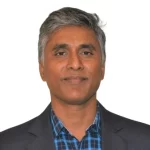
Balamurugan D is a 2005-batch IAS officer of the Bihar cadre, currently serving as Joint Secretary in the Ministry of Corporate Affairs. He previously served as Joint Secretary in the Department for Promotion of Industry and Internal Trade. In Bihar, he held several key leadership roles, including CEO of Bihar Rural Livelihoods Promotion Society, where he worked on large-scale rural livelihoods and women’s empowerment initiatives. He has also served as District Magistrate across five districts, bringing deep experience in governance, rural development, and administrative leadership.