
TECHNOLOGY Track
TECHNOLOGY SPECIALIZATION TRACK
India’s technology challenge is less about the innovation than about who governs it, and how.
A five-month, practitioner-led specialization on how India’s technology decisions actually move through regulation, governance, national security, and global competition: from a data protection law drafted in Delhi to a semiconductor mission built to compete with the world.
If you see yourself at the table designing the rules that govern AI, protect data, and decide how India competes on technology: This is for you.

Applications Open for Other Specializations
The field
WHAT IS TECHNOLOGY POLICY?
Technology policy is about who gets to build, who gets to regulate, and what happens when technology outpaces the law meant to govern it.
This calls for two things, learned together:
– The method: Training in how technology policy actually gets made, the politics and institutions behind a decision, and the analytical tools to read and evaluate them.
– The substance: Real knowledge of the issues at stake, how India governs data, platforms, AI, and cybersecurity, from the IT Act to Digital Public Infrastructure, and where regulation keeps up with technology and where it falls behind.
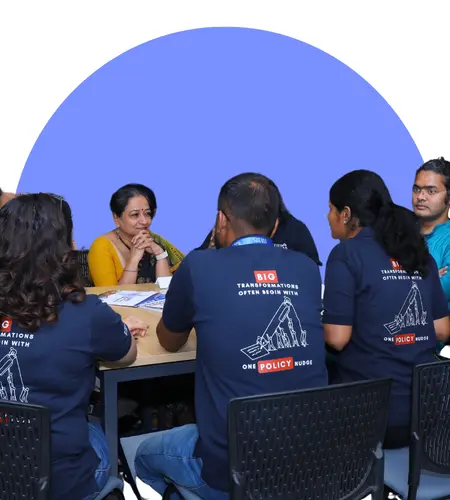
The Technology track by Policy Pioneers is built to give you both. Through India’s own tech governance landscape, live case studies, and practitioners who work on these problems daily, you build the method and the substance together through the lens of how India actually regulates technology.

The specialization
BUILT TO CLOSE THE GAP
Laws drafted years behind the technology they govern. Regulators without the mandate to act. A digital economy built faster than the rules meant to hold it accountable.
India’s technology ambitions are growing faster than the governance built to manage them. This specialization is built to close that gap.
Over five months, you learn why India’s technology governance struggles and what it takes to fix it: how platforms, data, and AI are regulated, how India competes globally on hardware and semiconductors, what cybersecurity actually demands of the state.
You are taught by practitioners, and you apply what you learn through a hands-on project with Bureaucrats on a live technology policy problem rather than a hypothetical one.
WHERE THIS SITS IN THE POLICY PIONEERS PROGRAM?
The Technology specialization is one track within Policy Pioneers. Alongside the domain modules, every participant covers the common program:
Self-assessment
IS THIS THE RIGHT TRACK FOR YOU?
Technology policy is not only for engineers and technologists. It is for anyone curious about why a technology law drafted in Delhi struggles to keep up with the technology it’s meant to govern.
This is for you if
- ✓You’ve wondered why India’s tech laws seem to lag behind the platforms, AI systems, and data flows they’re meant to regulate
- ✓Tracing power, who regulates a platform, who enforces a rule, who bears the risk when it fails interests you as much as the technology itself
- ✓You’re more curious about how India can compete on semiconductors, AI, and digital infrastructure than about the engineering behind any single product
Probably not for you if
- ✕You want training focused on building technology, this is about the rules and governance around it, not the engineering
- ✕You want a certificate without the work. The programme is project-based and demanding
- ✕You want a computer science or law degree, this asks how the state actually governs technology in practice, not how systems are coded or courts theoretically function
QUESTIONS YOU WILL WORK ON
Curriculum
SIX MODULES, FROM PROBLEM TO DELIVERY
Technology policy sits where regulation, geopolitics, national security, and innovation meet. The modules move from understanding why technology policy matters to designing and governing within it.

Policy Tools & Analytical Frameworks
Build essential policy skills: stakeholder mapping, policy reading, data-driven analysis, and communication while understanding the interplay between policy and politics.
Policy ReadingPolicyAnalysisStakeholder Mapping

UNDERSTANDING TECHNOLOGY POLICY
Why technology becomes a political, economic, and regulatory battleground, and how India’s tech governance has evolved from the IT Act and Aadhaar to AI governance.
Evolution of India’s Tech PolicyWhy Tech Policy Matters

Governance, Law & Digital Infrastructure
How India’s tech governance architecture is mapped across regulators, how technology law actually works in practice, and how India’s Digital Public Infrastructure compares globally.
Tech governance architectureDPI and data

Global Technology & Power
How countries build competitive tech industries, India’s Semiconductor Mission, China’s technology leadership, and what cybersecurity demands of the state.
Semiconductor MissionCybersecurity

Designing Policy Solutions
Using systems thinking and behavioural insights to navigate the real dilemmas tech regulators face innovation versus regulation, platform power versus user rights.
Systems thinkingBehavioural insights

Leading the Change
Policy writing, negotiation in high-pressure tech policy contexts, and career pathways into digital governance, AI ethics, and compliance.
Careers in tech policy Design Thinking
Hands-on projects
TECHNOLOGY IN PRACTICE
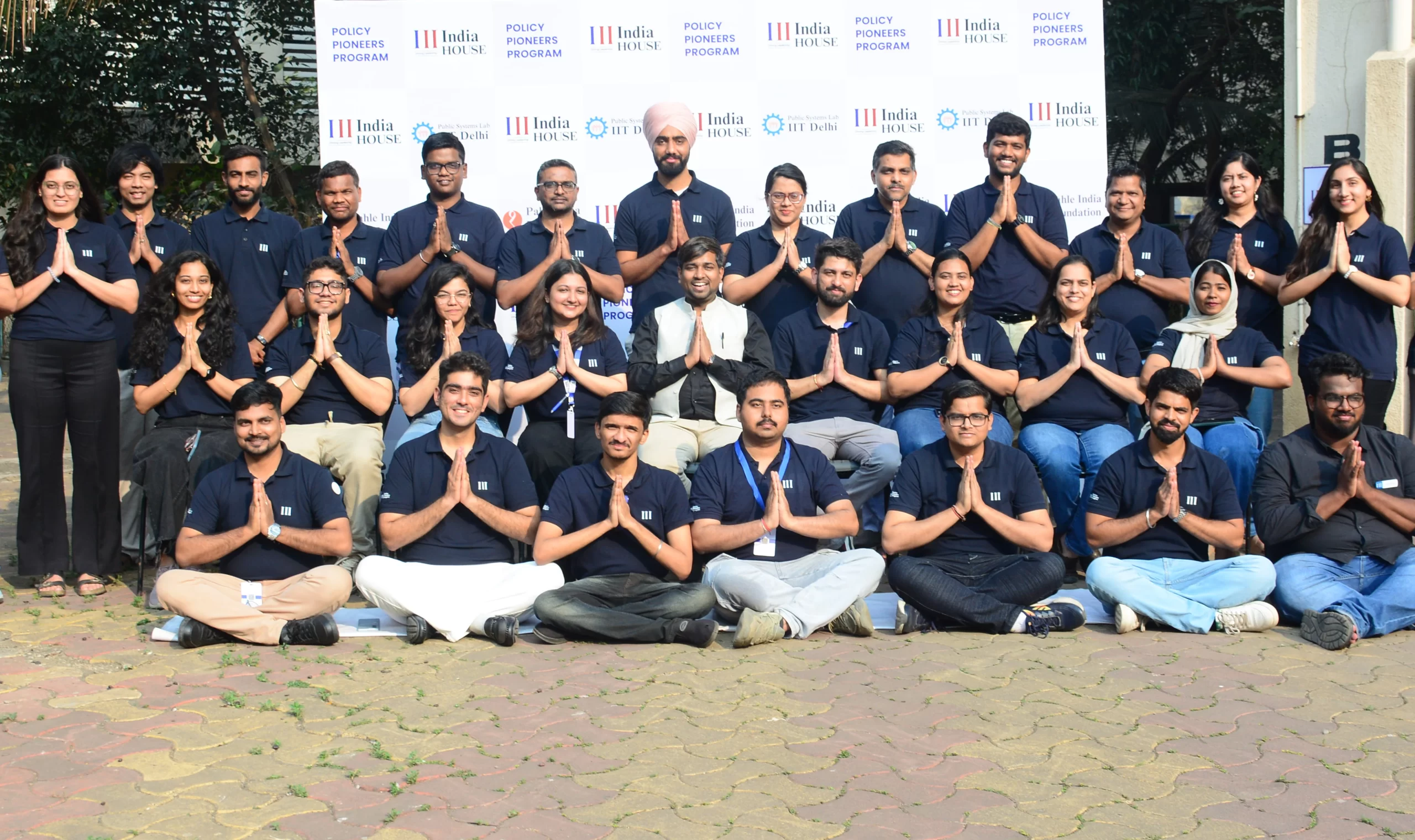
Past Policy Pioneers’ Cohort worked alongside bureaucrats and practitioners on live policy problems.

BUILDING AN S&T DIPLOMACY PLAYBOOK
India lacks an institutionalized playbook for diplomats to engage foreign tech ecosystems, This project built a S & T Diplomacy Playbook to help policymakers map global ecosystems and safeguard India’s tech partnerships.
Under Secretary, Government of India

TECH PLAYBOOK FOR URBAN DEVELOPMENT
Urban development corporations are adopting emerging technologies unevenly, with no shared framework for planning, monitoring, and service delivery. This project studied city-level examples to build a practical tech integration playbook.
Founder Director & CEO, New Bengal Consulting; Former Additional Chief Secretary (IT), West Bengal

BUILDING A SCHOOL-TO-COLLEGE INNOVATION PIPELINE
Over 9,000 Atal Tinkering Labs expose students to STEM, but innovators often lose momentum after school with no path into college resources. This project built an ATL-to-IIC bridge model with mentorship and shared prototyping access.
Innovation Officer, Ministry of Education’s Innovation Cell, AICTE, Government of India
Faculty
TAUGHT BY PEOPLE WHO DO THE WORK
Sessions are led by people who work in technology policy rather than only teach it: regulators, diplomats, cybersecurity specialists, and practitioners from across government, industry, and the tech ecosystem.

ANIL AGRAWAL
Former Member at Competition Commission of India
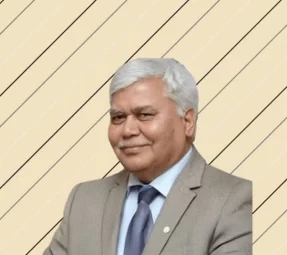
RAM SEWAK SHARMA
Former CEO of National Health Authority and Former Chairman of Telecom Regulatory Authority of India (TRAI)

DR. GULSHAN RAI
Distinguished Fellow at VIF and ORF, Director of CERT India, STQC and ERNET under MeitY

Prof. Ambuj Sahu
Assistant Professor, SASTech, Rishihood University

Shyam Krishnakumar
Co-Founder & Executive Director, The Pranava Institute

Aakash Guglani
Senior Manager, Digital India Foundation
Careers
The specialization builds capability rather than placing candidates. You leave with a working understanding of how technology policy is made in India, practical experience of applying it, and a network of people doing the work.
Think tanks and research
Policy and research roles in institutions building the evidence base for technology governance
Government and public bodies
Policy and regulatory roles across MeitY, TRAI, CERT-In, and other tech-governing institutions
Multilateral & Development Bodies
Program and technical roles in the UN, World Bank, and bilateral technology partnerships
Industry and Big Tech
Public policy, government affairs, and compliance roles in technology companies and platforms
Consulting and Advisory
Technology governance advisory, regulatory consulting, and digital transformation roles
Cybersecurity & National Security
Policy and strategy roles across cybersecurity institutions and national security bodies
Program details
DATES, FORMAT AND FEE
Key details
| Dates | Winter Cohort: December 2026 to April 2027 Phase III Applications close: 1 November 2026 |
| Format | Blended. Live online sessions plus 2 in-person camps. |
| Time Commitment | 10-12 per week |
| Eligibility | Open to graduates, postgraduates, and working professionals from any discipline. |
| Selection | Sign up → Application → Shortlisting → Personal interview → Selection |
Fee and scholarships
| Fee | Rs. 59000 + 18% GST |
| Scholarships | Need- and merit-based scholarships available, up to 75%. |
| Payment | Flexible payment plans, including instalments, are available. |
APPLY TO THE WINTER COHORT
The Technology Policy Specialization is coming soon.
Phase III Applications close on 1st November 2026.
FAQs
FREQUENTLY ASKED QUESTIONS
No. This specialization is open to participants from all academic and professional backgrounds. No prior technical or coding experience is required.
You will explore how governments shape the development, regulation, and adoption of technology. The specialization examines the intersection of technology, public policy, innovation, and society.
The curriculum covers technology governance, digital public infrastructure, data governance, AI and emerging technologies, innovation policy, cybersecurity, platform regulation, public service delivery, and India’s evolving technology policy landscape.
You will learn to analyse technology policies, evaluate regulatory frameworks, understand emerging technologies, map stakeholders, and develop evidence-based policy recommendations.
The specialization combines expert-led sessions, real-world case studies, and Hands-on Projects that address emerging technology and digital governance challenges through a policy and implementation lens.
Projects are undertaken in collaboration with government departments and guided by serving and retired civil servants. You may work on developing policy frameworks, implementation playbooks, governance toolkits, or strategic recommendations to address challenges related to digital governance, emerging technologies, innovation, and public service delivery.
You will learn from policymakers, technology practitioners, researchers, entrepreneurs, and experts working across India’s technology and innovation ecosystem.
The specialization prepares you for opportunities in technology policy, government, public affairs, think tanks, consulting, digital public infrastructure, research institutions, startups, and corporate public policy.
This specialization is for anyone interested in technology governance, digital transformation, AI, innovation, cybersecurity, or the role of technology in shaping public policy and society.
The program begins with common Policy Foundations sessions. After these conclude, participants move into their chosen specialization, with all tracks running in parallel.
Specialization sessions run in parallel, so attending another track live may not be possible. However, you will have access to the recordings and learning resources for all tracks through the LMS.