POLICY PIONEERS- EDUCATION Track
EDUCATION POLICY SPECIALIZATION
India’s education challenge is less about what’s taught than about the system that decides who learns, how, and for how long.
A five-month, practitioner-led specialization on how India’s education decisions actually move through governance, financing, pedagogy, and delivery: from a classroom in a government school to a policy drafted in a state.
If you see yourself at the table designing the system that gets a curriculum implemented, a school held accountable, and a child actually learning, this is for you.
Applications Now Open
The field
WHAT IS EDUCATION POLICY?
Education policy is about shaping the systems, institutions, and decisions that determine how education is delivered, who has access to it, what is taught, and how learning prepares people for the needs of society.
This calls for two things, learned together:
The method: Training in how education policy actually gets made, the politics and institutions behind a decision, and the analytical tools to read and evaluate them.
The substance: Real knowledge of the issues at stake, how India’s schools and universities are governed, financed, and regulated, from foundational learning to higher education, and where reforms like NEP hold up and where they don’t.
The Education track by Policy Pioneers is built to give you both. Through India’s own education policy landscape, live case studies, and practitioners who work on these problems daily, you build the method and the substance together through the lens of how India actually educates.
The specialization
BUILT TO CLOSE THE GAP
Learning gaps that widen every year. Teacher vacancies in the districts that need them most. Curricula rewritten on paper, unchanged in the classroom.
India’s education ambitions are growing faster than the systems built to deliver them. This specialization is built to close that gap.
Over five months, you learn why India’s education system struggles and what it takes to fix it: how schools and universities are financed, how learning outcomes are measured, what technology changes and what it does not.
You are taught by practitioners, and you apply what you learn through a hands-on project with a serving officer, on a live education policy problem rather than a hypothetical one.
WHERE THIS SITS IN THE POLICY PIONEERS PROGRAM?
The Education specialization is one track within Policy Pioneers. Alongside the domain modules, every participant covers the common program:
Self-assessment
IS THIS THE RIGHT TRACK FOR YOU?
Education policy is not only for teachers and school administrators. It is for anyone curious about why a classroom in one district looks nothing like a classroom two hundred kilometres away.
This is for you if
- ✓You’ve wondered why a curriculum reform announced in Delhi looks completely different by the time it reaches a government school
- ✓Tracing who’s accountable, the teacher, the school, the district, the state — interests you as much as the learning outcomes themselves
- ✓You’re more curious about why one state’s education model outperforms another’s than about debating exam pressure or rote learning in the abstract
Probably not for you if
- ✕You want training focused on pedagogy or classroom teaching methods — this is about the systems around the classroom, not inside it
- ✕You want an education or teaching degree, this asks how the state actually delivers education in practice, not the theory of how children learn
- ✕You want a certificate without the work. the program is project-based and demanding
QUESTIONS YOU WILL WORK ON
Curriculum
SIX MODULES, FROM PROBLEM TO DELIVERY
Governance sits where politics, law, administration, technology and delivery meet. The modules move from understanding how the state is built to designing and delivering within it.

UNDERSTANDING Education in indian context
What education means beneath the exam scores and enrolment numbers, and the Indic and global perspectives that still shape how India teaches.
Indic perspectives Education Education models Education policy evolution

EDUCATION POLICY AND GOVERNANCE
The journey to NEP, how India’s education policy has evolved, who governs and regulates it, and where accountability actually sits.
NEP evolutionGovernance and accountabilityRegulatory bodies

Educational Landscape & Financing
Public, private, & alternative schooling models, how learning outcomes are measured; the ways education gets financed from ECCE to higher education.
Education financingPublic vs private schooling

Policy in Practice
Real education programs and initiatives, case studies from the Gurukul, Finnish, and Japanese models, and where technology is changing how children learn.
Global education modelsCase-based learningEdTech

Designing Policy Solutions
Using systems thinking and behavioural insights to build education policy that actually survives implementation.
Behavioural insights ·Systems ThinkingPolicy design
Leading the Change
Career discussions, hands-on projects, and a negotiations and change-management workshop, with a focus on entrepreneurship in education.
Hands-OnProjectsEntrepreneurship in EducationSocial Leadership
Hands-on projects
EDUCATION IN PRACTICE
Past Policy Pioneers’ Cohort worked alongside bureaucrats and practitioners on live policy problems.
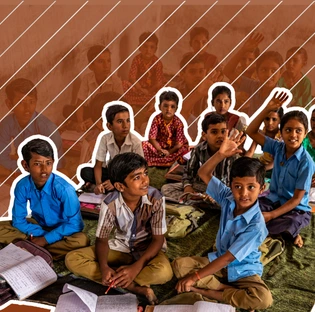
IMPLEMENTING NEP & NCF
NEP 2020 and NCF 2023 demand a shift from rote learning to competency-based education, This project built a district-focused framework for implementation, drawing on models like the Happiness Curriculum to embed local culture into learning.
Chairperson, Gujarat RERA
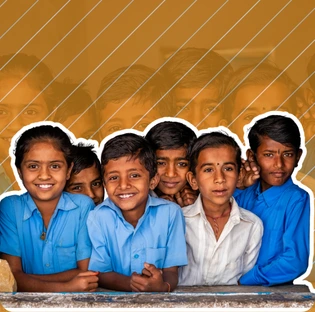
ENABLING DM–CSO COLLABORATION
Nearly 29,000 civil society organisations work in education, yet district administrations lack a structured way to engage them. This project built an administrator-facing handbook covering engagement models, MoU frameworks, and monitoring tools for District Magistrates.
CEO, Bhiwadi Integrated Development Authority
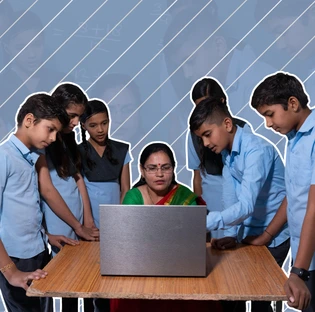
REFORMING TEACHER TRANSFERS
India has over 97 lakh teachers, yet transfer processes remain opaque and politicised, leaving urban schools over-staffed and remote districts with vacancy rates above 30%. This project mapped existing rules and transfer patterns to co-create a decision-support matrix.
Additional Chief Secretary of Transport, Haryana
Faculty
TAUGHT BY PEOPLE WHO DO THE WORK
Sessions are led by people who work in governance rather than only teach it: IAS officers, policy specialists, and practitioners from across government and public institutions.
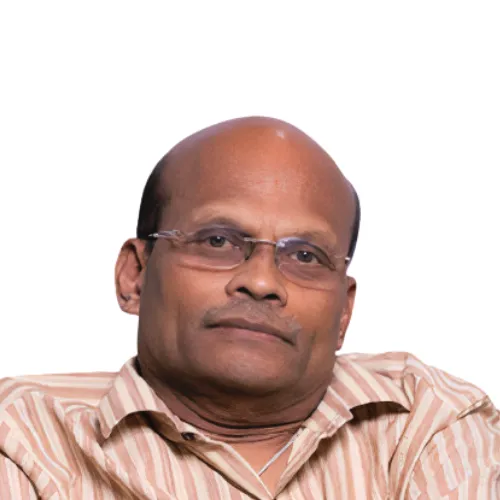
Padma Shri M.K. Sridhar
President, CESS, Bengaluru

Subhashini Rajasekaran
Senior Education Specialist, World Bank
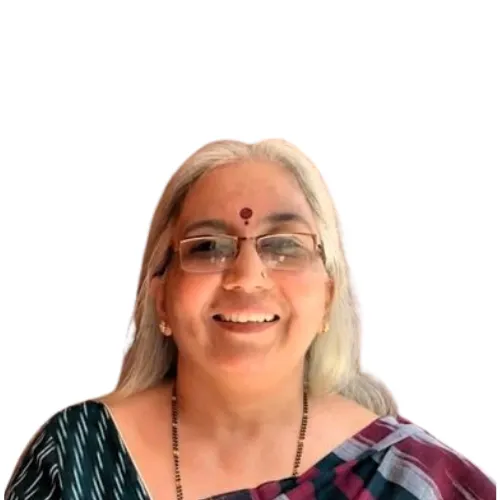
Suparna Diwakar
Chief Consultant, Program office, National Syllabus and TLM Committee
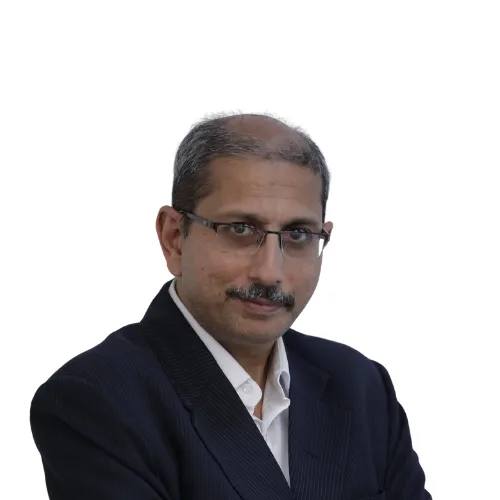
Sridhar Rajagopalan
Co-Founder, Educational Intiatives Group
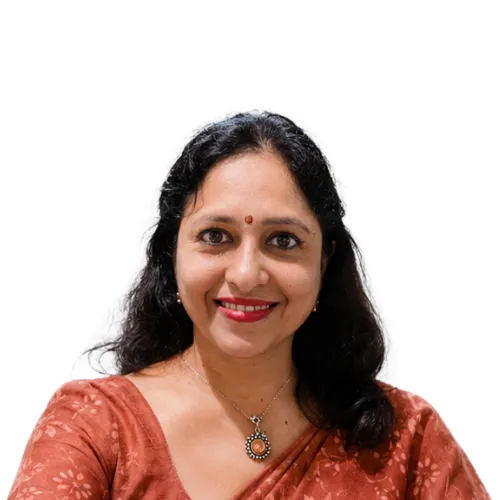
Dr. Sudha Chandrashekar
Senior Consultant, The World Bank
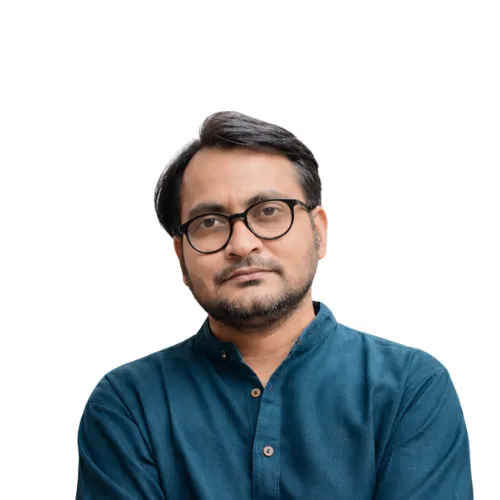
Dr. Anurag Shukla
Director- Education (Policy), Brhat
Careers
WHERE THIS LEADS
The specialization builds capability rather than placing candidates. You leave with a working understanding of how governance policy is made in India, practical experience of applying it, and a network of people doing the work.
Think tanks and research
Policy and research roles in institutions building the evidence base for education reform
Government and Civil Services
Administrative and policy roles across education ministries, state departments, and regulatory bodies
MULTILATERAL & DEVELOPMENT bodies
Program and technical roles in UNICEF, UNESCO, the World Bank, and bilateral education partnerships
EDTECH AND INNOVATION
Product, policy, and market roles in education technology and learning platforms
CONSULTING AND ADVISORY
Education advisory, public sector consulting, and institutional reform roles
PHILANTHROPY AND CIVIL SOCIETY
Grantmaking, program implementation, and advocacy roles in education foundations and NGOs
Program details
DATES, FORMAT AND FEE
Key details
| Dates | Winter Cohort: December 2026 to April 2027 Phase III Applications close: 1 November 2026 |
| Format | Blended. Live online sessions plus 2 in-person camps. |
| Time commitment | 12-15 hours per week |
| Eligibility | Open to graduates, postgraduates, and working professionals from any discipline. |
| Selection | Sign up → Application → Shortlisting → Personal interview → Selection |
Fee and scholarships
| Fee | Rs. 59000 + 18% GST |
| Scholarships | Need- and merit-based scholarships available, up to 75% |
| Payment | Flexible payment plans, including instalments, are available. |
APPLY TO THE WINTER COHORT
The Education Policy Specialization runs from December 2026 to April 2027.Applications for Phase III closes 1 November 2026