
POLICY PIONEERS- Governance Track
GOVERNANCE POLICY SPECIALIZATION
India’s governance challenge is less about the law than about the machinery that enforces it.
A five-month, practitioner-led specialization on how India’s governance decisions actually move through institutions, administration, law, and the coordination between Centre, State and district.
If you see yourself at the table designing the system that gets a scheme delivered, a state and center aligned, and a city actually governed, this is for you.
Applications Now Open
The field
WHAT IS GOVERNANCE POLICY?
Governance is about how a country decides who has the power to act, who answers for it, and what happens when a decision is made?
This calls for two things, learned together:
The method: Training in how governance actually functions: the politics and institutions behind a decision and the analytical tools to read and evaluate them.
The substance: Real knowledge of the issues at stake: how power is divided between the Centre, the states, and the judiciary, from the Constitution down to the district collectorate, and where that division holds and where it breaks down.
The Public Systems and Governance track by Policy Pioneers is built to give you both. Through India’s own administrative architecture, live case studies, and practitioners who work on these problems daily, you build the method and the substance together through the lens of how India is actually run.

The specialization
BUILT TO CLOSE THE GAP
Stalled schemes. Departmental turf wars. Center-state standoffs. Judgments that arrive a decade too late.
India’s governance ambitions are growing faster than the machinery built to carry them out. This specialization is built to close that gap.
Over five months, you learn why India’s health system struggles and what it takes to fix it: how care is financed, how institutions are governed, what technology changes and what it does not.
You are taught by practitioners, and you apply what you learn through a hands-on project with a serving officer, on a live health policy problem rather than a hypothetical one.
WHERE THIS SITS IN THE POLICY PIONEERS PROGRAM?
The Governance specialization is one track within Policy Pioneers. Alongside the domain modules, every participant covers the common program:
Self-assessment
IS THIS THE RIGHT TRACK FOR YOU?
Governance is not only for civil servants and aspiring bureaucrats. It is for anyone curious about why a decision made in Delhi does or doesn’t change anything for the person it was meant for.
This is for you if
- ✓You have watched a scheme, a project or a promise stall somewhere between announcement and delivery, and wanted to understand where it actually got stuck rather than just who to blame
- ✓Tracing power who has the authority to decide, who has to coordinate, and who’s left holding the outcome — interests you as much as the policy itself
- ✓ You are more curious about why the same law works in one state and fails in another than about winning an argument about politics
Probably not for you if
- ✕You want training focused on one ministry, scheme, or department. This is about the architecture that connects all of them, not expertise in one part.
- ✕You want a political science or law degree. Governance asks how the state actually functions in practice, not the theory of how it’s supposed to
- ✕You want a certificate without the work. The program is project-based and demanding
QUESTIONS YOU WILL WORK ON
Curriculum
SIX MODULES, FROM PROBLEM TO DELIVERY
Governance sits where politics, law, administration, technology and delivery meet. The modules move from understanding how the state is built to designing and delivering within it.
GOVERNANCE in the Indian context
What governance actually means beneath the politics people see, and how India’s own traditions and models of authority still shape the state today.
Indic perspectives GovernanceGovernance models Politics vs administration

Institutional architecture: Centre, State and district
How power is structured and divided across India’s tiers of government, and how a decision made in Delhi travels down to a district office.
District ArchitectureFederal StructureCentre-State dynamics

Law, rules and regulatory frameworks
How courts, constitutions and regulation shape what the state can and cannot do, and where landmark judgments have redrawn the boundaries.
Constitutional FrameworkJudicial Systems
Regulatory Policy

Navigating the machinery: stakeholders and the state
How decisions actually move through departments, institutions and competing interests, and what it takes to get them delivered.
Stakeholder managementCase-based delivery Inter-departmental coordination

TECHNOLOGY AND THE FUTURE OF CARE
How data and digital systems are changing how the state reaches people, and where that promise still falls short.
Data and PolicyDigital Governance Service Delivery
POLICY DESIGN AND IMPLEMENTATION
What makes governance work in the hardest, most crowded delivery environment, the city and how to read the system well enough to move within it.
Urban GovernanceSystems ThinkingNavigating the state
Hands-on projects
GOVERNANCE IN PRACTICE
Past Policy Pioneers’ Cohort worked alongside bureaucrats and practitioners on live policy problems.

LEVERAGING FARMER ID DATA
Over 4.85 crore Farmer IDs have been generated under AgriStack, but this data remains underused for policymaking. This project built a model dashboard and localized outreach tools to drive farmer awareness and adoption of Farmer ID.
Chief Knowledge Officer, Ministry of Agriculture

EMPOWERING WOMEN SHGs
India has over 6 crore women SHG members, yet female labour participation remains at just 37%. This project built a segmented support framework integrating models like Mahila e-Haat for reskilling, incubation, and financial access at every life stage.
Special Chief Secretary, Government of Telangana

STRENGTHENING LIVELIHOODS
Western and southern Odisha’s rain-fed farms run largely on women’s labour, yet face low productivity and distress migration. This project maps skills and finance gaps, exploring non-farm diversification to build sustainable income pathways for women workers.
Member of Parliament, Rajya Sabha, Odisha
Faculty
TAUGHT BY PEOPLE WHO DO THE WORK
Sessions are led by people who work in governance rather than only teach it: IAS officers, policy specialists, and practitioners from across government and public institutions.
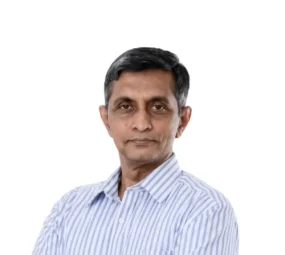
Dr. J. P. Narayanan
Former IAS, Founder, Lok Satta Party
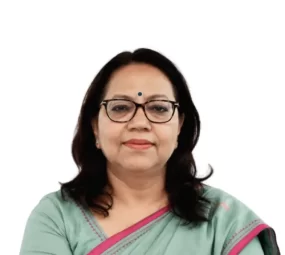
Alka Upadhyaya
I.A.S, Secretary, National Commission for Minorities, Former Secretary, Animal Husbandry & Dairying

Shrutanjay Narayanan
IAS, Joint Chief Electoral Officer (IT), Goverment of Tamil Nadu

Dr. Basavaraju R. Shreshta
Executive Director of GRAAM (Grassroots Research and Advocacy Movement)

Deepika Kinhal
Chief Executive Officer, CORD. Former Advisor at Vidhi Centre for Legal Policy

ANITA KUMAR
Director – Policy & Insights, Janaagraha
Careers
WHERE THIS LEADS
The specialization builds capability rather than placing candidates. You leave with a working understanding of how governance policy is made in India, practical experience of applying it, and a network of people doing the work.
Think tanks and research
Policy and research roles in institutions building the evidence base for governance reform
Government and Civil Services
Administrative and policy roles across ministries, state departments, and public institutions
MULTILATERAL & DEVELOPMENT bodies
Program and technical roles in the UN, World Bank, and bilateral development partnerships
GOVTECH AND PUBLIC SECTOR INNOVATION
Digital governance, e-governance platforms, and technology roles in public service delivery
CONSULTING AND ADVISORY
Governance advisory, public sector consulting, and institutional reform roles
PHILANTHROPY AND CIVIL SOCIETY
Grantmaking, program implementation, and advocacy roles in foundations and civic organizations
Program details
DATES, FORMAT AND FEE
Key details
| Dates | Winter Cohort: December 2026 to April 2027 Phase III Applications close: 1 November 2026 |
| Format | Blended. Live online sessions plus 2 in-person camps. |
| Time commitment | 12-15 hours per week |
| Eligibility | Open to graduates, postgraduates, and working professionals from any discipline. |
| Selection | Sign up → Application → Shortlisting → Personal interview → Selection |
Fee and scholarships
| Fee | Rs. 59000 + 18% GST |
| Scholarships | Need- and merit-based scholarships available, up to 75% |
| Payment | Flexible payment plans, including instalments, are available. |
APPLY TO THE WINTER COHORT
The Governance Policy Specialization runs from December 2026 to April 2027. Phase III Applications Closes on 1st November 2026
FAQs
FREQUENTLY ASKED QUESTIONS
No. This specialization is open to participants from all academic and professional backgrounds. No prior governance knowledge is required.
You will explore how government functions, how different institutions and stakeholders interact, and how public policies are designed, implemented, and evaluated.
Key themes include governance models, public administration, constitutional and legal systems, Centre–State relations, district governance, public service delivery, technology in governance, and stakeholder management.
You will build skills in policy analysis, institutional thinking, stakeholder management, implementation analysis, and governance problem-solving.
Projects typically involve designing practical solutions to governance challenges mentored by serving or retired bureaucrats across areas such as agriculture, livelihoods, social development, and public service delivery.
The specialization combines expert-led sessions, case studies, and hands-on projects that expose you to real governance challenges and policy implementation.
It prepares you for roles in government advisory, public policy consulting, multilateral organizations, think tanks, development organisations, CSR, research, and governance-focused nonprofits.
This track is ideal for anyone interested in governance, public administration, institutional reform, public service delivery, or working closely with government systems.
While all tracks build a strong foundation in public policy, the governance specialization explores how institutions are designed, how decisions are implemented, and how public systems can be strengthened to deliver better outcomes.
The program begins with common policy foundations sessions. After these conclude, participants move into their chosen specialization, with all tracks running in parallel.
Specialization sessions run in parallel, so attending another track live may not be possible. However, you will have access to the recordings and learning resources for all tracks through the LMS.